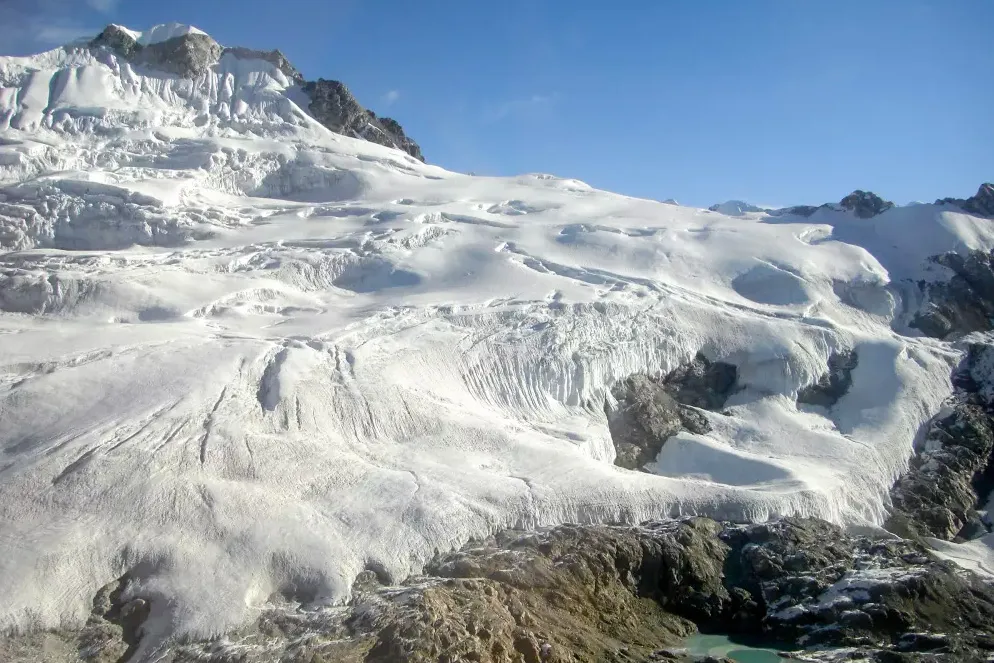
Himalayan glaciers in Nepal attract Nepalese and international tourists most of the time. Nepal is known as the largest Himalayan state in Asia promoting maximum amount of Himalayan glaciers.
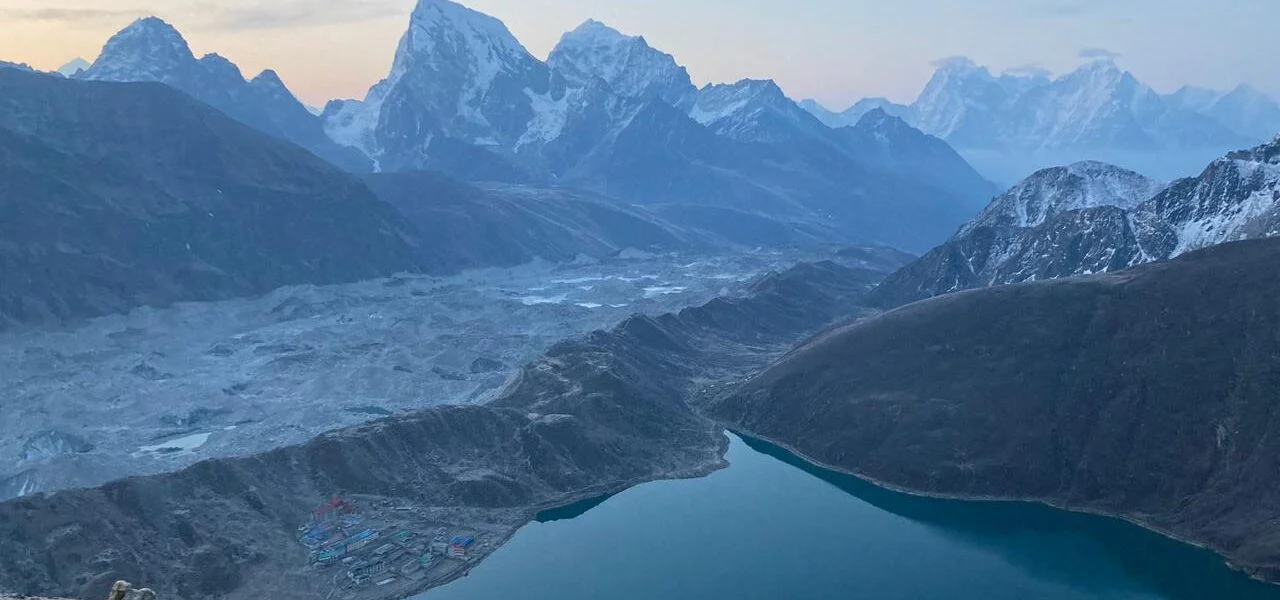
There are plenty of tall peaks in the context of Nepal. Having said that, 8 of the 10 tallest mountains in the world are located in Nepal. With every mountain, you could find Himalayan glaciers in Nepal.
This goes on to provide a unique natural beauty to the country. On average 5300km has been covered by Himalayan glaciers in Nepal, which is a massive number.
How are Himalayan Glaciers in Nepal formed?
Eventhough the beauty and natural viewpoint of Himalayan glaciers is massive, it is key to know the formation of these glaciers. The snow is first formed on the high altitude spaces where the temperature is very low.
Every year, the snow forms in the same space, making the overall area more dense and crystalline, which has seen the formation of ice for centuries. After the wind and gravity compress it for years, hardness is formed.
Lastly, with centuries of pressure, intermediate ice converts to hard glacier ice, which ultimately adds beauty to the peaks. Any mountain glacier you see today has ice older than 1000 years.
Type of Glacier in Nepal
Himalayan glaciers in Nepal aren’t the only type of glaciers in Nepal. With the natural beauty and variation of the country, you can see different kinds of glaciers in the country.
These kinds of glaciers are shaped by elevation, terrain, climate, and natural causes. A valley glacier is a type of glacier that is present in the region. Imja glacier, Ngozumpa Glacier are key valley glacier.
Another kind of glacier includes debris-covered glaciers. You will find these debris covered glaciers mostly in black or grey color. The mixed colors provide different beauty to the glaciers themselves.
Impact of Climate Change on Himalayan Glaciers in Nepal
Climate change has been a major threat not only for the Himalayan glaciers in Nepal but also for global natural scenarios. The snow on the mountains seems to be melting more quickly due to climate change.
Moreover, the impact of climate change on Himalayan glaciers in Nepal is massive. With climate change, the glaciers experience an increase in temperature of 2-3 times the global average.
Along with that, monsoon changes make the accumulation uneven, which is a problem as well. Uneven weather conditions limit the snowfall, resulting in less and poorer accumulation.
As climate change hits the shores, you could also experience GLOF. It means a glacier lake outburst flood. These floods can be instant, resulting in flash floods, loss of life, and habitat loss in the nearby region.
List of Well-Known Himalayan Glaciers in Nepal
There are different kinds of glaciers when we talk about Nepal. Based on popularity, there are glaciers present in different parts of the country. Starting from Koshi province, you will find glaciers in Bagmati, Karnali etc.
Some of the well-known glaciers are:
- Ngozumpa glacier (Everest region)
- Langtang glacier (Langtang Valley)
- Khumbu glacier (Lhotse-Nuptse ridge)
- Barun glacier (Baruntse)
- Hunku glacier (Baruntse)
- Makalu glacier (Makalu peak)
- Imja glacier (Island peak)
- Ambulapcha glacier (Cho Polu)
- Lhotse Shar Glacier (Lhotse region)
- Nuptse glacier (Nuptse peak)
Importance of Himalayan Glaciers in Nepal
A lot of readers and trekking enthusiasts might be thinking the key importance of Himalayan glaciers in Nepal is all about their beauty. Well you are clearly mistaken.
The Trek Nepal and other trekking communities believe the role of glaciers isn’t only about beauty but also has other key roles too. Let’s find out the actual value of Himalayan glaciers:
-
Water supply in dry season
The biggest advantage of glaciers in Nepal is that they maintain the water flow in the rivers even during the drier season. Mainly during the summer season, the rivers dry up. As a result, glacier water helps to maintain the levels of those rivers.
-
Agriculture and livelihood
Mainly during the agriculture season, the water level in the rivers are massively low. So, with proper flow from the glaciers, the issues of irrigation, drinking water, and farming are solved all at once.
-
Hydropower and Energy
As we know, Himalayan glaciers in Nepal feed the rivers with water they require through the drier season. Not only that, but they also play a major role as a catalyst for hydropower generation. It is due to glaciers that proper energy supply is maintained in Nepal.
-
Water security
The high altitude regions of Nepal are more dependent on and focused on rivers and streams for water supply. With the presence of glaciers, water security hasn’t been an issue. These glaciers provide a brilliant freshwater supply to people in South Asia.
-
Tourism and Cultural Value
Without a doubt, the biggest advantage of Himalayan glaciers would be for tourism and cultural values in the context of Nepal. Tourists from all over the world visit Nepal to understand its beauty and culture. Glacier lakes add another dimension to its beauty. Khumbu and Langtang region have the best glaciers so it remains crowded most of the time.
Best Time To Visit Himalayan Glaciers in Nepal
As for trekking as well, the best time to visit glaciers in Nepal is similar to that of the trekking season. With the right visibility, controlled weather, and pristine beauty, Himalayan glaciers in Nepal is best visited during the months of spring and autumn.
Spring falls during the months of March to May, while autumn is more about September to November. Clear skies, stable weather works as the ideal weather for glacier visits.
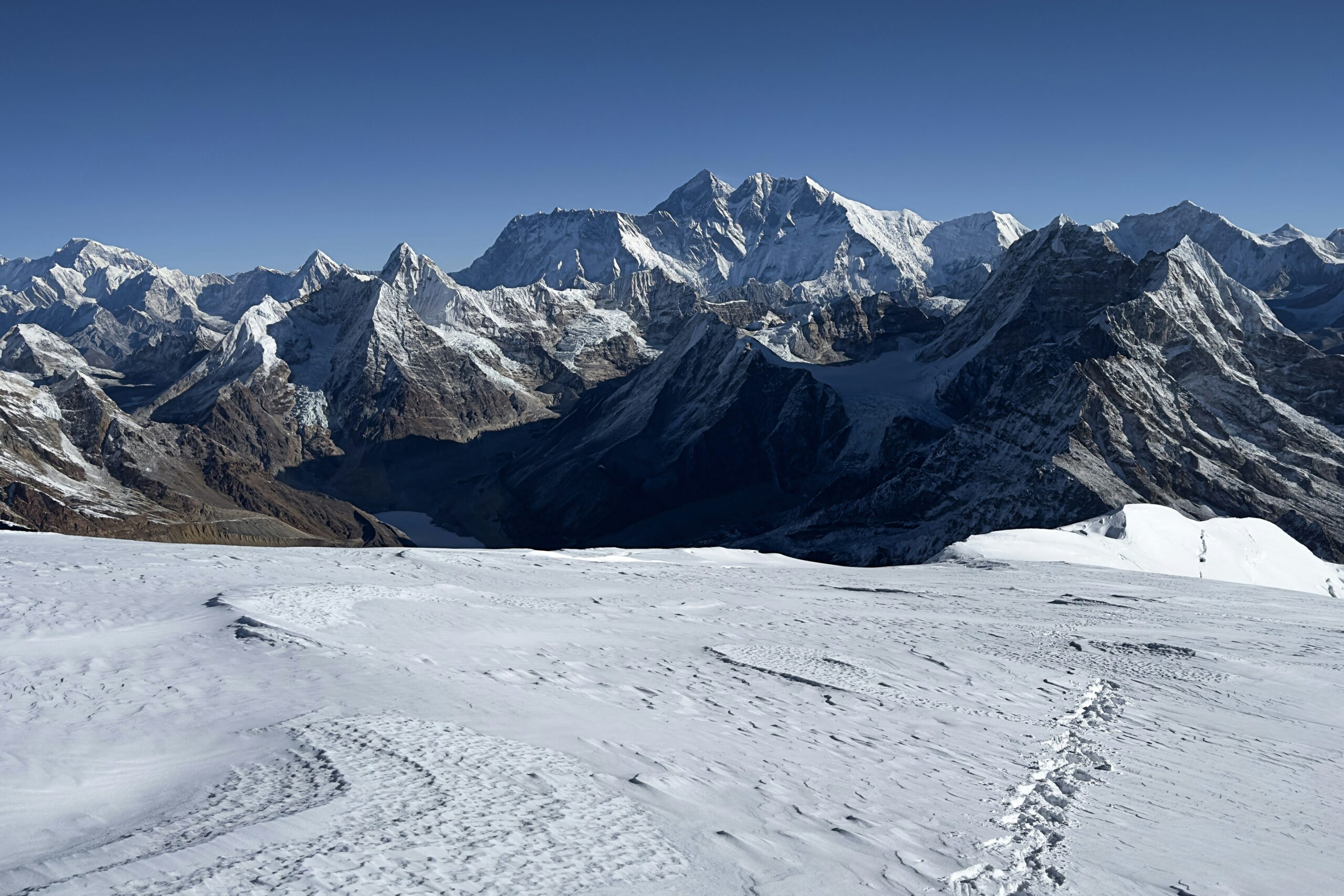
The visibility remains very clear during this period, making the journey exciting. Even with The Trek Nepal, we plan the glacier visits mainly during the months of spring and autumn.
Gokyo Lake trek, Everest Base Camp trek, Langtang Valley trek, and Island Peak Climbing are perfect options to view the glaciers of your choice at your time.
But if you are planning for the winter or monsoon season, we dont suggest it at all. It is more of a risky take to choose selections during this period.
Anyone who wants to know more about glacier visits, has a limited budget, but wants to get the perfect experience can connect with The Trek Nepal.