
Gurja Himal is famous as the lowest point of the Dhaulagiri range. Even though it sits at the lowest, the technical skills required to climb it shouldn’t be overlooked. The Gurja Himal expedition might not look tough for everyone, but skills are the key.
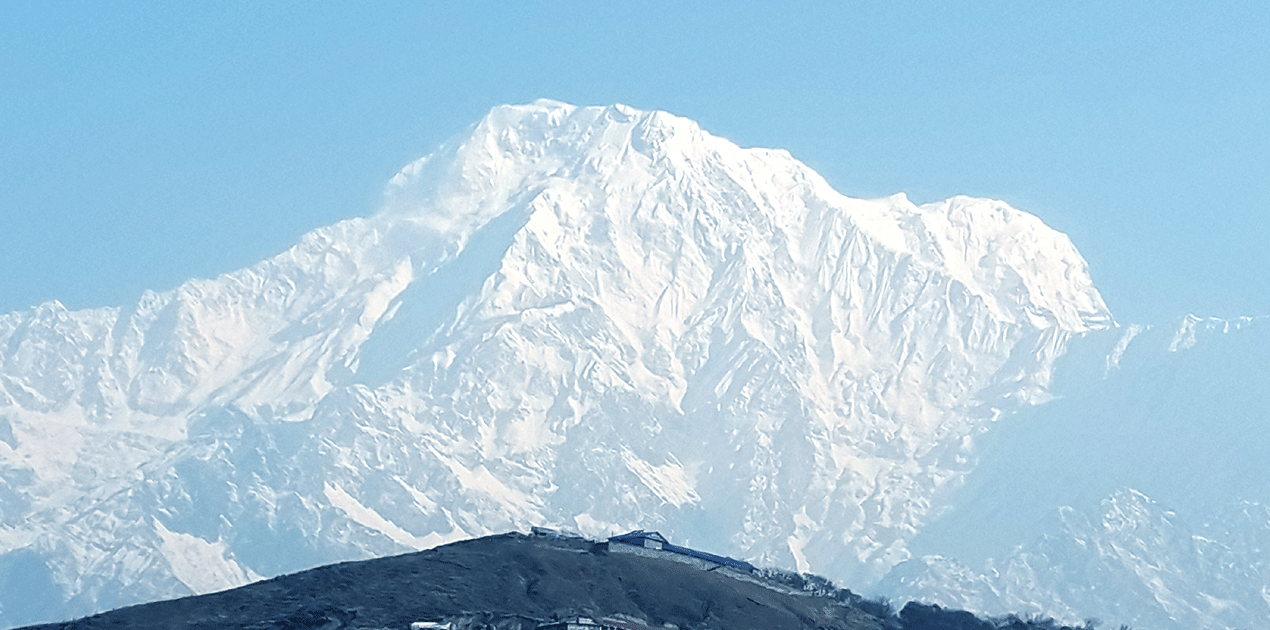
Located in the Dhaulagiri range, this particular peak gets overlooked most of the time. But the circular route to go with the hidden valleys and beautiful views makes the Gurja Himal expedition a major climb.
Gurja Himal Overview
Gurja Himal stands at an altitude of 7193m in the Dhaulagiri Himal range. You will find this particular peak 21.3km west of Dhaulagiri I.
Besides, the climbers will also have the assistance of Dhaulagiri II, III, IV, V, and VI. To the west of the Gurja Himal lies Churen Himal and Ghustang. This shows Gurja is covered by mountains left, right, and center.
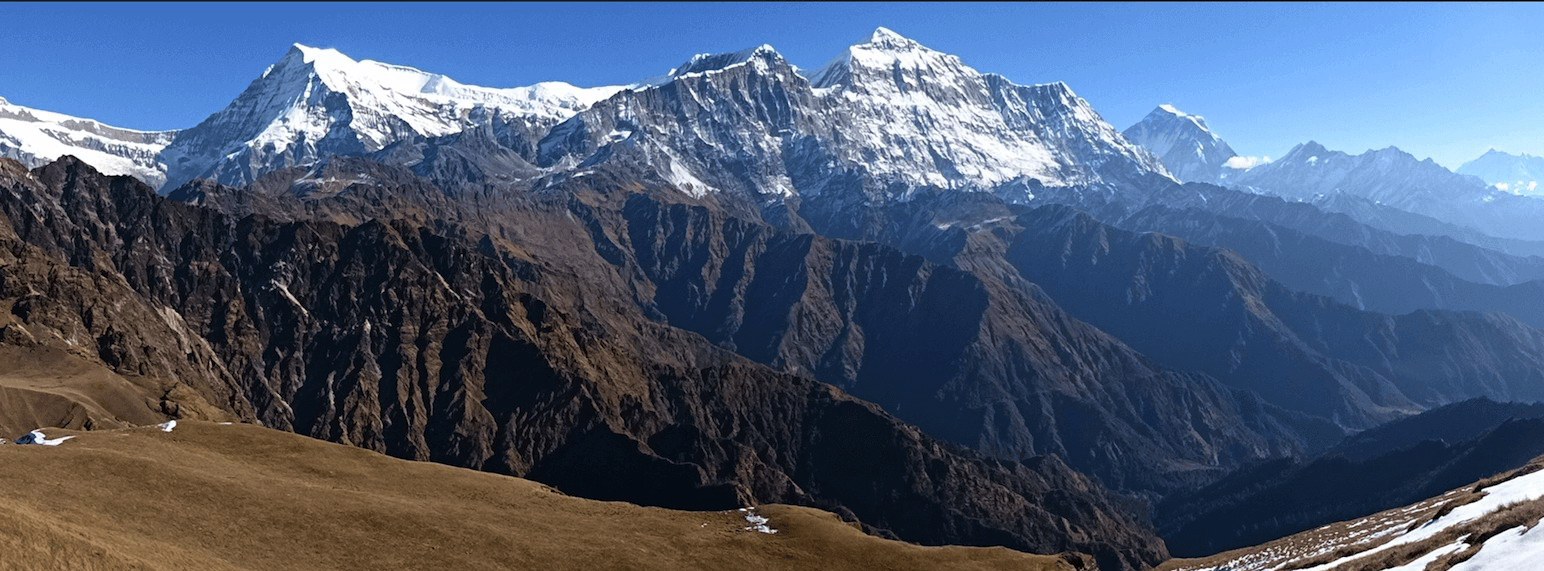
There are two major passes in the Gurja Himal expedition. Kaphe glacier lies in the northwest, while Konabon glacier lies in the northeast flank. Some of the major mountain views during the Gurja Himal expedition are Churen Himal, Putha Hiunchuli, and Dhaulagiri.
Highlights of Gurja Himal Expedition
- View the mountains like Churen, Putha Hiunchuli, and the Dhaulagiri range
- Witness the culture of the Magar and Chhantyal people
- Chance to view the wildlife like red panda, Himalayan Thar, eagles, and vulture
- Cross through difficult passes like Rugachaur, Kaphe glacier, and Konabon glacier
History of Gurja Himal Expedition
Lying in the Dhaulagiri range, Gurja tends to get overlooked most of the time. But the history of the Gurja Himal expedition goes way back.
The first ever ascent to Gurja Himal was made in the late 60’s by a Japanese climbing team. On 1st November, 1969, the team of Mr T Saeki, Lhakpa Tenzing, A Lnouye, S Kanayama, H Sakai, K Shimoda, and Y Yakushi completed the climb.
They tried to climb from the west ridge and were successful on the first attempt. The Japanese team was ably supported by the Sherpa guides. Since this climb, the doors to Gurja Himal have been open.
Climbing Route for Gurja Himal Expedition
One of the off-beaten climbs in Nepal, the Gurja Himal expedition starts from Baglung. The journey kicks off through the pastureland to reach Gurjaghat and Gurjakhani.
During the experience, you will pass through villages like Gurja and Pachhim Gaon. With remoteness on the extreme, you will find scarce civilization and vegetation during this journey.
On the way, you will find rhododendron, oak, pine trees, along with juniper, birch, and fir trees. For the wildlife, though, there is the presence of musk deer, blue sheep, foxes, martens, etc.
On average, you will be spending more than a month in the wilderness of the Dhaulagiri region. We suggest that all trekkers have physical fitness and mental strength for this journey.
Best Time to Perform Gurja Himal Expedition
There are a lot of treks in Nepal that can be done all year round. But for that, you will need to have better experience. However, to get the best results from the trek, autumn and spring are the right choices.
For the Gurja Himal expedition too months of March to May and September to November could be perfect for you. The major reason is the stable weather along with natural beauties.
The temperature remains in the moderate range with better views of wildlife and vegetation. As we climb more than 7000m in this journey, choosing the right season is the key.
The weather in the mountains can be highly unpredictable during winter or the monsoon. Chances of rainfall and avalanches get multiplied, so The Trek Nepal doesn’t suggest either monsoon or winter for the Gurja Himal expedition.
But this doesn’t mean it can be done. If you have a high level of mountain climbing experience, it is possible even during winter and monsoon. There will be fewer crowds and more remoteness during this period. Some of the climbers absolutely love that.
How Hard is the Gurja Himal Expedition?
The difficulty of any trek is determined by the number of days spent in the wilderness, along with the altitude gain.
When we talk about the Gurja Himal expedition, it is a bit difficult. If you are an experienced climber, Gurja might not be challenging, but for beginners, it could be challenging enough.
Starting from 970m, the altitude rise spikes up to 7000m, which is a tough ask. The accommodations are mainly teahouses and homestays, while you will find basic food during the journey.
If you are someone who looks for better facilities and luxury during a trek, the Gurja Himal expedition might not be for you. The trails are off beaten with little development.
For the period of over a month, trekkers will have to walk for 7 hours every day. In order to complete this trek, you will need proper training. But if you have some experience in climbing, the Gurja Himal expedition might not be too tough for you.
Cost of Gurja Himal Expedition
Any trek that goes beyond a month generally gets expensive, and the same is the case with the Gurja Himal expedition. The cost is determined by various factors like time of the year, number of people, quality of service, etc.
When we talk about the Gurja Himal expedition, the cost will be between $13000 and $15000. These particular costs tend to cover every expense during the 37 days.
From food to permits, high altitude Sherpa, base camp support, training, guided climbs, meals, and accommodation, everything gets taken care of. However, the extra costs like returning flight tickets, tips to porters etc wont be under this.
With The Trek Nepal though, things are different. We tend to provide services and an itinerary based on the time and budget of the client. So if you have a limited budget or time, we suggest you connect with The Trek Nepal.
We have helped climbers to get to their dream trekking destinations on their budget and time. We will provide overall guidance along with training. Contact The Trek Nepal and know more.
Alternative Treks to Gurja Himal Expedition
Not every climber is interested in the lesser-known treks. If you are one of them, don’t worry, we have alternative trek options to the Gurja Himal expedition as well.
These options are present in and around the same peak. The alternative trek options to the Gurja Himal expedition are:
- Upper Dolpo Trek
- Nar Phu Valley Trek
- Khopra Danda Trek
- North Annapurna Base Camp Trek
Detailed Itinerary About Gurja Himal Expedition
Day 1: Arrival in Kathmandu (1,345 m)
Your Gurja Himal expedition begins as you land at Tribhuvan International Airport, where a representative greets you and assists with your transfer to the hotel. The drive introduces you to Kathmandu’s lively streets, traditional architecture, and vibrant atmosphere.
After check-in, there is time to rest or briefly explore nearby areas, depending on your arrival schedule. In the evening, a pre-expedition briefing is conducted covering logistics, safety protocols, and team introductions. This first day is intentionally relaxed, allowing recovery from travel while ensuring all permits, documents, and gear are for the upcoming Gurja Himal expedition.
Day 2: Permit, Preparation, and Briefing in Kathmandu
The second day is dedicated to final preparation for the Gurja Himal expedition. While the expedition team manages permits and official documentation, you have time to explore or visit the busy trekking hub of Thamel for last-minute gear purchases. Kathmandu is well known for its mountaineering stores, making it ideal for equipment checks and upgrades. In the afternoon, a comprehensive briefing outlines the trek route, acclimatization strategy, emergency procedures, and climbing plan. Final gear inspection ensures every participant is fully prepared before leaving the city.
Day 3: Drive to Pokhara (950 m)
The journey continues with a scenic drive from Kathmandu to Pokhara, following the Trishuli River through terraced farmlands and rural settlements. Along the way, distant views of the Himalayas begin to appear. After a lunch stop, the road gradually descends to the lakeside city of Pokhara, famous for Phewa Lake and panoramic views of the Annapurna and Dhaulagiri ranges. The evening is free to relax by the lake or explore the vibrant surroundings before the trekking phase of the Gurja Himal expedition begins.
Day 4: Drive to Darbang (1,110 m)
A picturesque drive takes you deeper into western Nepal toward Darbang, the gateway to the Gurja Himal region. The route passes rivers, suspension bridges, and terraced hillsides, offering glimpses of rural Himalayan life. Upon arrival, preparations for trekking begin, including organizing gear and coordinating with porters. This marks the transition from road travel to the core trekking segment of the Gurja Himal expedition.
Day 5 : Trek to Takum via Dharapani (1,670 m)
The trek officially begins, passing through terraced fields, riverside trails, and traditional villages.
Dharapani offers a cultural pause where interaction with locals gives insight into mountain lifestyles. The trail ascends through rhododendron and oak forests before reaching Takum, a peaceful village with views of surrounding hills and valleys.
Day 6: Trek to Lumsang Village (2,120 m)
The trail gradually climbs through dense forests, waterfalls, and small settlements. As elevation increases, the scenery becomes more dramatic, with wider mountain views emerging. Lumsang presents a more traditional Himalayan setting, offering a deeper cultural experience and a quieter environment.
Day 7: Trek to Gurja Village (2,620 m)
Continuing upward, the trek leads through forests and terraced landscapes to Gurja Village, a key settlement in the region. The village offers close-up views of surrounding peaks and serves as an important cultural and logistical stop during the Gurja Himal expedition.
Day 8: Trek to Darsinge Khark (3,600 m)
The trail climbs significantly, moving into alpine terrain. Forests give way to open grazing lands and high-altitude vegetation. Darsinge Khark, a seasonal pasture, provides expansive mountain views and a sense of remoteness deep within the Himalayas.
Day 9: Trek to Burjunga Khark (3,415 m)
A mix of ascents and descents across alpine meadows leads to Burjunga Khark. The route offers excellent views of Gurja Himal, building anticipation for the climbing phase of the Gurja Himal expedition.
Day 10: Trek to Gurja Himal Base Camp (4,600 m)
The final push to base camp involves rocky trails, moraines, and high-altitude terrain. Upon reaching base camp, you are surrounded by glaciers and towering peaks. The team sets up camp and begins acclimatization while preparing for the technical climbing phase ahead.
Day 11–29: Climbing Period of Gurja Himal (7,193 m)
This is the most critical phase of the Gurja Himal expedition, involving acclimatization, rotations between camps, and summit attempts.
The team establishes Advanced Base Camp, Camp I, and Camp II, gradually adapting to altitude.
Summit attempts depend on weather conditions and team readiness. Contingency days are included to ensure safety and maximize success chances. After summit attempts, the team descends back to base camp.
Day 30: Return to Burjunga Khark
Descending from base camp, the trail retraces through alpine terrain back to Burjunga Khark. The thicker air and lower altitude provide relief after the demanding climbing period.
Day 31: Trek to Gurja Village
The descent continues through familiar landscapes back to Gurja Village, offering a comfortable stop with opportunities to reconnect with local culture.
Day 32: Trek to Lulang via Lumsang and Dobang (2,200 m)
The trail follows a varied route through forests and villages, eventually reaching Lulang. This section highlights rural Himalayan life and scenic transitions from high alpine to mid-hill environments.
Day 33: Trek to Darbang (1,670 m)
Descending further, the trail returns to Darbang. The warmer climate and greener surroundings mark the end of the trekking phase of the Gurja Himal expedition.
Day 34: Drive to Pokhara
A long but scenic drive returns you to Pokhara, where you can relax by Phewa Lake and enjoy modern comforts after weeks in the mountains.
Day 35: Drive to Kathmandu
The journey back to Kathmandu follows rivers and hills, providing time to reflect on the expedition. Upon arrival, you check into your hotel and may explore Thamel for dining or shopping.
Day 36: Rest Day and Farewell in Kathmandu
A free day allows rest or sightseeing, including landmarks like Swayambhunath and Pashupatinath Temple. In the evening, a farewell dinner with cultural performances celebrates the successful completion of the Gurja Himal expedition.
Day 37: Departure for the home nation
The journey concludes with a transfer to Tribhuvan International Airport for departure. The Gurja Himal expedition ends with lasting memories of Himalayan landscapes, cultural encounters, and the achievement of a high-altitude climb.