
Dolpa and Mustang might be districts far away, but they have some of the rare peaks. Peaks that haven’t been climbed a lot. Mukot Himal expedition is one such fine example.
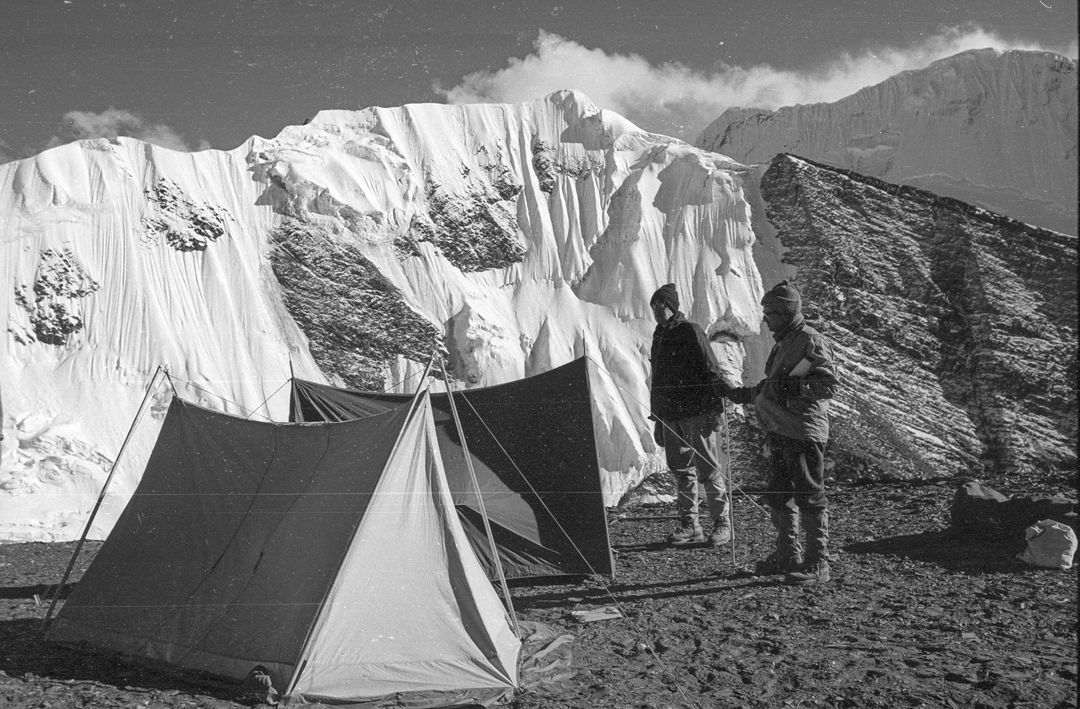
Located in the western part of Nepal, Mukot wasn’t famous amongst the mountaineers, but recently the interest has grown. The Trek Nepal has also been performing the climbs in the region.
Mukot Himal Expedition Overview
Mukot Himal expedition takes place at an altitude of 6087m. Even though it is just above 6000m, the remoteness makes things tougher.
This particular peak is located in the Dhaulagiri Himal range. As easy as it may sound, you will need proper planning to get to the top of this peak. As the Dolpo region throws in the surprise with the peak, you can enjoy the ruggedness and beauty of the peak.
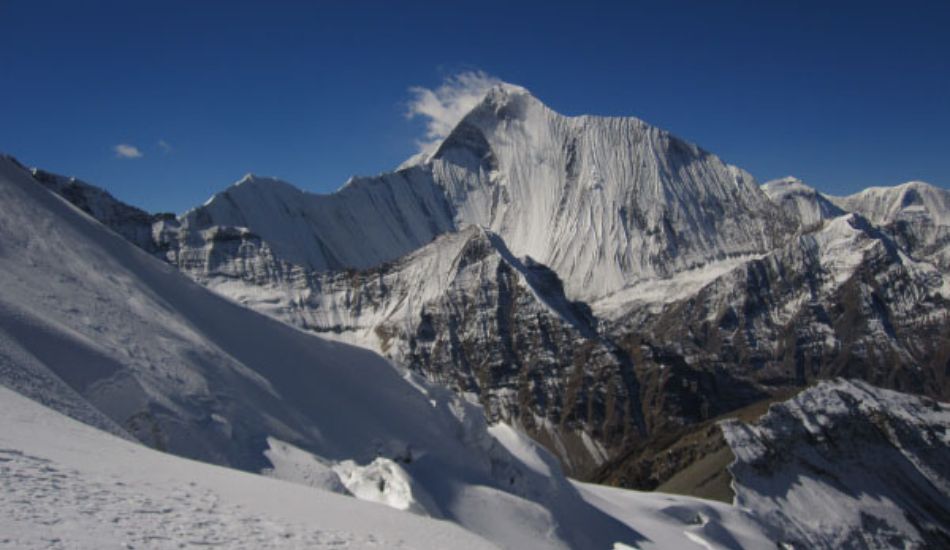
As you complete the Mukot Himal climb, you will get outstanding views of Dhaulagiri Peak. Along with that, the rarely used Mu la pass will also be at your disposal. For an enthusiastic climber, these factors tend to make the difference.
Highlights of Mukot Himal Expedition
- Witness the beautiful Dhaulagiri peak along with Mu La Pass
- Understand the lifestyle and interact with the locals of the Dolpo region
- Practice and understand the use of ice axes, crampons, and ropes
- Be part of the Tibetan culture, people, and their rich history
Who climbed Mukot Himal Peak for the first time?
You will be surprised to know that it has been only one decade since the Mukot Himal was first climbed.
Yes, the first-ever Mukot Himal expedition was done in 2015. A Canadian-UK group was able to get to the top on 17th October, 2015. It was the first attempt, so technical issues did arise.
Adrian Sommers led the way, according to the American Alpine Club. Not only Adrian, but there were other members too. The summiting team on the day included Mark Aitken, Sian Beaty, Alexander Duhault, Mark Soares, Kami Sherpa, Mingma Dorje Sherpa, and Gelgin Sherpa
Sherpas from the local groups did make the overall journey much easier. Even though 2015 is the first year recorded, some unrecorded data also show 1967 as the first year.
To reach the top, the 2015 team approached from the northwest side to the north ridge. This made the job easier to push for the summit.
TAAN officially opened the pathways in 2015 after this successful attempt. Although the gates are open, remoteness and lack of interest have made this a rarely climbed peak.
Climbing Route To Mukot Himal Expedition
The climbing route to Mukot Himal isn’t as easy as it seems. You will have to go through plenty of remoteness to reach the top. Meanwhile, you will get into the Dhaulagiri region through the Barbung Khola valley in the Lower Dolpo section.
This route usually involves a flight to Juphal and a trek through Tarap and finally to Mukot village. A thin settlement will be present in the region where we set up the base camp.
Small challenges mean that it is Per Difficile for the mountain climb. Some of the key landmarks in the climb include Mulunsumna, Jungbenla Pass, and the beauty of Jomsom.
Best Time to Perform Mukot Himal Expedition
As the Mukot Himal expedition takes place at a remote location in Nepal, choosing the right season is key. Although the peak is just above 6000m, it is important to focus on the trails.
The best time to perform the Mukot Himal expedition is during the pre-monsoon and post-monsoon seasons. You will get the best weather, climate, and beautiful mountain views during this time.
It falls during April to May, along with September to November. Stable temperature, good roads, and rhododendrons all along the way make the journey exciting.
The Trek Nepal, however, doesn’t mean you can’t do the Mukot Himal expedition during the monsoon or winter. But you have to be highly skilled to do it in tough seasons.
Along with that, the beautiful views tend to get missed during the off-season. Heavy rain and slippery roads might increase the risk of accidents; choosing the right season is the key.
Permits Needed for Mukot Himal Expedition
As the Mukot Himal expedition takes place in the Dhaulagiri region, you will get similar permits for this expedition too.
Meanwhile, choosing the right trekking agency, like The Trek Nepal, will make the permits readily available for you. Along with that, you will also get permits from the Nepal Tourism Board.
However, if you are performing the trek alone, the permits needed for the Mukot Himal expedition include:
- Mukot Himal Climbing Permit
- Restricted Area Permit
- Shey Phoksundo National Park Permit
- Trekkers Information Management System (TIMS) Card
Alternative Treks to Mukot Himal Expedition
Not everyone is keenly interested to spend almost a month in the remote lands. There are a lot of trekkers who come along The Trek Nepal, selecting the well-known treks.
For those trekkers, the Mukot Himal expedition might not be the right choice. If you fall under the same category, alternative treks to the Mukot Himal expedition include:
- Mera Peak Climbing
- Manaslu Circuit Trek
- Kanchenjunga Base Camp trek
- Nar Phu Valley Trek
Why Choose The Trek Nepal for Mukot Himal Expedition?
There are 100s of trekking agencies in Nepal. All of them have been doing a wonderful job in the case of brilliant trekking work.
However, things are different with The Trek Nepal. We have been doing trekking and mountain expeditions for decades now. Along with that, our team of experts is the best in the business.
Besides having fun and enjoying nature, we also focus on protecting it. Community development, no carbon footprints, and zero waste are what we believe in.
Moreover, our key focus has been to help the clients with the best services. As a result of that, we also have a customized package for our clients. Based on your budget and time, we help you choose the right package.
All of this works positively for the clients. Working with more than 1000 clients has been our strength. All you have to do is contact The Trek Nepal and feel the difference yourself.
Detailed Itinerary About Mukot Himal Expedition
Day 1: Arrival in Kathmandu & Hotel Transfer (1,350m)
Your Mukot Himal Expedition begins as you land at Tribhuvan International Airport. A representative welcomes you and transfers you to your hotel through the lively streets of Kathmandu. After check-in, you complete registration formalities and have time to relax or explore nearby areas such as Thamel, known for its cafes, trekking shops, and vibrant atmosphere. This day allows you to settle in and prepare mentally for the journey ahead.
Day 2: Flight to Nepalgunj (150m)
You take a scenic flight from Kathmandu to Nepalgunj, a gateway to western Nepal. Located in the lowlands near the Indian border, Nepalgunj offers a stark contrast to the Himalayas with its warm climate and flat terrain. After arrival, you transfer to your hotel and rest, preparing for the next stage of your Mukot Himal Expedition.
Day 3: Flight to Juphal & Trek to Dunai (2,141m)
An early flight takes you to Juphal, offering breathtaking views of the Annapurna Range and Dhaulagiri. From Juphal, you begin trekking downhill through terraced fields to the Bheri River valley. Following the river gorge, you reach Dunai, the administrative center of Dolpo, marking your entry into a remote Himalayan region.
Day 4: Trek from Dunai to Tarakot (2,560m)
The trail follows the Bheri and Barbung rivers through narrow gorges and pine forests. You reach Tarakot, an ancient settlement with historical significance as a trading hub. The dramatic cliffside trails and river views make this a memorable section of the Mukot Himal Expedition.
Day 5: Trek from Tarakot to Musi Khola
Continuing along the Barbung Khola valley, you pass small settlements like Laisicap before diverging from the main Dolpo route. The trail becomes quieter and more remote as you head toward Musi Khola, where you camp in a peaceful alpine pasture surrounded by untouched nature.
Day 6: Trek from Musi Khola to Kakkot Gaon (3,285m)
After crossing streams and suspension bridges, the valley begins to widen, revealing your first close views of the Dhaulagiri Range. You pass through traditional villages and reach Kakkot Gaon, where a nearby monastery adds a spiritual dimension to your Mukot Himal Expedition.
Day 7: Trek from Kakkot Gaon to Gharegoan (3,941m)
The trail alternates between riverbanks and elevated paths, offering stunning perspectives of the valley. Crossing traditional wooden bridges, you gradually ascend to Gharegoan, a remote village with stone houses and agricultural terraces, surrounded by dramatic Himalayan scenery.
Day 8: Trek from Gharegoan to Terang Gaon
A shorter trekking day allows you to follow the valley’s curve to Terang Gaon. This village showcases preserved Dolpo culture, with stone pathways and traditional lifestyles largely unchanged for generations.
Day 9: Trek from Terang Gaon to Mukot Gaon (4,022m)
Leaving the Barbung Khola, you follow the Mukot Khola with panoramic views of peaks like Dhaulagiri I, Sita Chuchura, and Gurja Himal. After a steady ascent, you reach Mukot Village, the last settlement before entering true wilderness—an important milestone in your Mukot Himal Expedition.
Day 10: Trek from Mukot Gaon to Neni Goth (4,530m)
You ascend above Mukot Village to a grazing area called Neni Goth. The trail crosses rocky terrain and glacial streams. This day focuses on gradual altitude gain, crucial for acclimatization during the Mukot Himal Expedition.
Day 11: Trek to Mukot Himal Base Camp (5,180m)
A challenging ascent across moraines and boulder fields leads to the base camp of Mukot Himal. The site offers breathtaking views of the towering northwest face of Dhaulagiri. Base camp becomes your operational hub for climbing activities.
Day 12: Acclimatization & Skill Practice
You spend the day acclimatizing and practicing technical climbing skills such as rope handling and glacier travel. This preparation ensures safety and efficiency for the summit attempt, a critical phase of the Mukot Himal Expedition.
Day 13: Contingency / Additional Acclimatization
This extra day provides flexibility for weather delays or further acclimatization. Short hikes around base camp help maintain physical readiness.
Day 14: Summit Mukot Himal & Return to Base Camp
Summit day is the highlight of your Mukot Himal Expedition. You climb snow slopes and a steeper ridge using fixed ropes. From the summit, enjoy panoramic views of the Dhaulagiri massif before descending safely back to base camp.
Day 15: Contingency Day
Reserved for weather delays or rest, ensuring a safe and flexible expedition schedule. There are cases when the weather can be an issue. The Trek Nepal carefully plans contingency days to make things easier.
Day 16: Trek from Base Camp to Mula Tal
Descending from base camp, you head toward Mula Tal. The trail offers stunning views of the surrounding peaks and leads to a camp near the Mu La Pass approach.
Day 17: Cross Mu La Pass to Nulungsumda (5,716m)
Crossing Mu La Pass is one of the most dramatic sections. The pass offers panoramic views of Dolpo and Mustang, with Dhaulagiri dominating the skyline. You descend to a yak pasture for camp.
Day 18: Cross Niwas La & Jungben La to Ghalden Ghuldum
You traverse multiple high passes, including Jungben La, with expansive views of Mustang and Dhaulagiri. The challenging terrain makes this a physically demanding but rewarding day.
Day 19: Trek from Ghalden Ghuldum to Sangta
Descending through river valleys and crossing suspension bridges, you reach Sangta village. The landscape transitions gradually from alpine to semi-arid terrain.
Day 20: Trek from Sangta to Phalek
You trek along ridges with views of the Kali Gandaki Valley and peaks like Nilgiri and Thorong Peak. Descend via jeep track to Phalek.
Day 21: Trek from Phalek to Jomsom
Cross a small pass and descend to Jomsom, a major hub in Mustang. This marks the end of trekking for your Mukot Himal Expedition.
Day 22: Flight from Jomsom to Kathmandu via Pokhara
Fly through the Kali Gandaki valley to Pokhara and then onward to Kathmandu. The aerial views provide a final glimpse of the Himalayas.
Day 23: Buffer Day in Kathmandu
This flexible day allows rest or exploration of heritage sites such as Swayambhunath, Boudhanath Stupa, or Patan Durbar Square, enriching your Mukot Himal Expedition with cultural experiences.
Day 24: Departure from Nepal
You are transferred to Tribhuvan International Airport for your departure, concluding the Mukot Himal Expedition with lasting memories of remote landscapes, high passes, and a successful Himalayan climb.