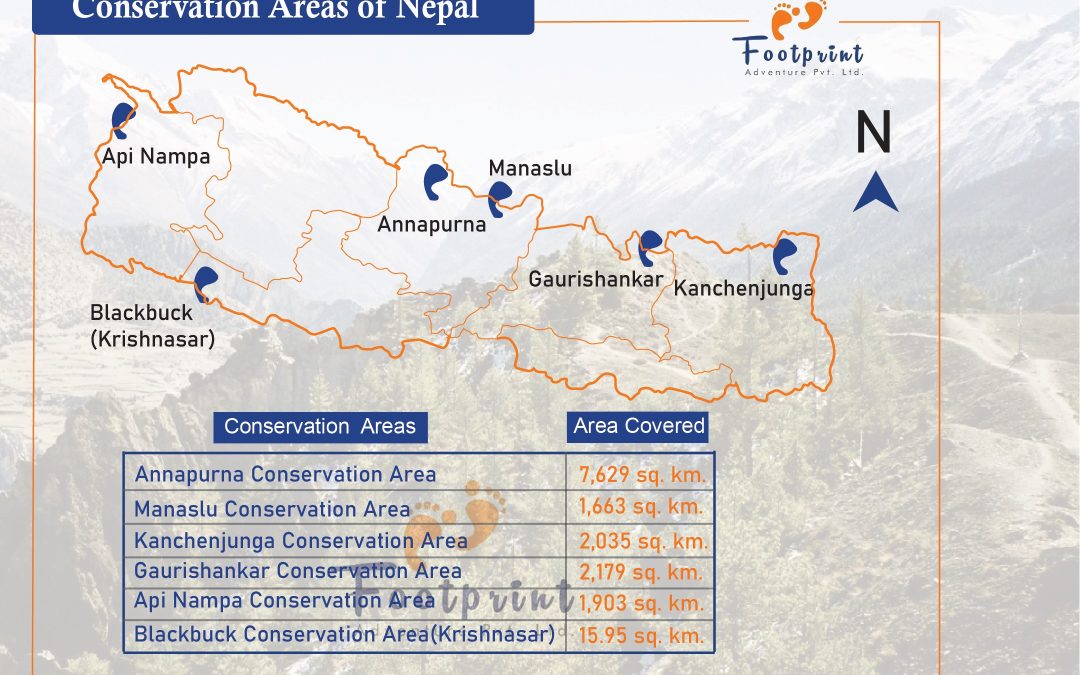
Readers might be thinking that Nepal is all about the mountains, but there is much more to Nepal. The natural heritage of the country is second to none. When we focus on the conservation areas of Nepal, there are plenty.
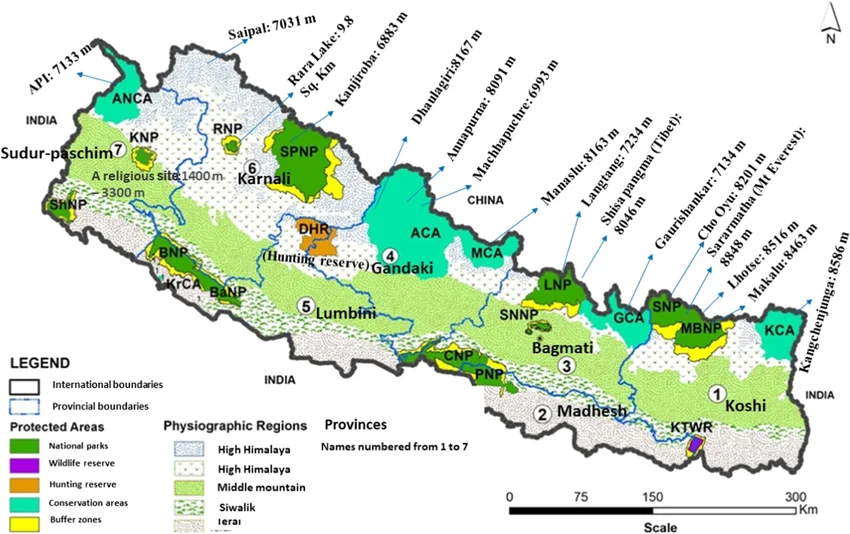
To protect the natural vegetation, wildlife, and natural heritage, the Government of Nepal has created conservation areas in Nepal.
Any guests who are interested in visiting the conservation area can easily do it. Most of the time, The Trek Nepal also arranges the trek opportunity to these conservation areas of Nepal.
Protected Areas of Nepal
When we talk about protected areas of Nepal, there are basically 2 types of such regions. One is called a national park, while the second one is a conservation area of Nepal.
Even in a small country like Nepal, you will find 12 national parks. Similarly, there are 6 conservation areas where the wildlife and natural vegetation are protected in their natural form.
Most of the time, readers think it is limited to national parks and conservation areas only. Well, you can also find wildlife reserves and hunting reserves in Nepal.
There is 1 hunting reserve and 1 wildlife reserve in Nepal. Anyone who is interested in hunting can visit the place and hunt legally.
Conservation Areas of Nepal
In order to protect the wildlife along with the natural habitat, Nepal has dedicated conservation areas under its name. There are a total of 6 conservation areas in Nepal.
-
Annapurna Conservation Area
Located in the north-central part of Nepal, Annapurna Conservation Area is one of the biggest in terms of conservation area of Nepal. Spead in 7629 sq km, it was established in 1992.
Annapurna Conservation Area is home to 518 birds, 105 mammals, 40 reptiles, and 23 amphibians. When you explore the Annapurna Conservation Area, you can witness peaks like Annapurna II, III, and Dhaulagiri.
The Trek Nepal organises treks in the region too. With well-known trails like Annapurna Base Camp trek, Annapurna circuit trek, Ghorepani Poonhill trek, Tilicho Lake with Thorong La Pass, there are plenty of options.
-
Manaslu Conservation Area
Let’s move the list of conservation areas of Nepal to the western side of the country. Manaslu Conservation Area was declared in 1998 and has since then been home to different animals and plants.
You can also find the 8th-highest peak of the world here, which is Manaslu. You can find 6 climatic zones in the region with 33 species of mammals, 110 species of birds, 2000 species of plants, 11 kinds of forests, 11 species of butterflies, and 3 species of reptiles.
Trekkers usually plan the Manaslu circuit trek along with the Tsum Valley trek when they visit this conservation area. You can see peaks like Samdo, Larkya Peak, Simnang Himal, Langbo Kangi, Chamar and the very own Manaslu.
-
Kanchenjunga Conservation Area
One of the toughest peaks in the world is Kanchenjunga, and the conservation area of Kanchenjunga is even more beautiful. It covers an area of 2035m which is located in Taplejung district.
Kanchenjunga Conservation Area first came into existence in 1998 and has since then been a major part of the conservation areas of Nepal. You will find the 3rd-highest peak here along with other peaks like Kangbachen, Kumbakarna, Gimmigela Chuli, Drohmo peak, Yalung glacier, etc.
Talking about the wildlife and vegetation, there are 23 species of rhododendron and 250 endangered animals and birds. Along with that, you will also find a variety of cultures living in the region.
-
Gaurishankar Conservation Area
Protected in the Himalayas of Nepal, touching three districts, Dolakha, Sindhupalchowk, and Ramechhap, you will find Gaurishankar spread over an area of 2179 sq km.
From sub-tropical forest to alpine ecosystem, there is plenty of variety in the Gaurishankar Conservation Area. Pharchamo Peak, Chekigo Peak, Ramdung Peak, and Pachermo Peak are some of the key highlights of the region.
Trekkers can also find 24 species of fish, 695 species of flora, 12 species of amphibians, 27 species of reptiles, 252 species of birds, and 71 species of mammals. Without a doubt, the variety present in the region is immense.
-
Api Nampa Conservation Area
One of the least talked-about conservation areas of Nepal is the Api Nampa Conservation Area. Interestingly, the guests at The Trek Nepal also enquire about this place is less number. This particular conservation area is located in the far western region of Nepal.
Established in 2010, this area was named after Api and Nampa peaks. From subtropical vegetation to high valleys, glaciers and rugged mountains, you will find distinction and variety. This particular conservation area is spread over 1903 sq km.
In total, you will find 69 species of pteridophytes, 12 species of gymnosperms, 535 species of angiosperms, 43 species of mammals, 263 bird species, along with 69 species of fish.
-
Krishnasaar Conservation Area
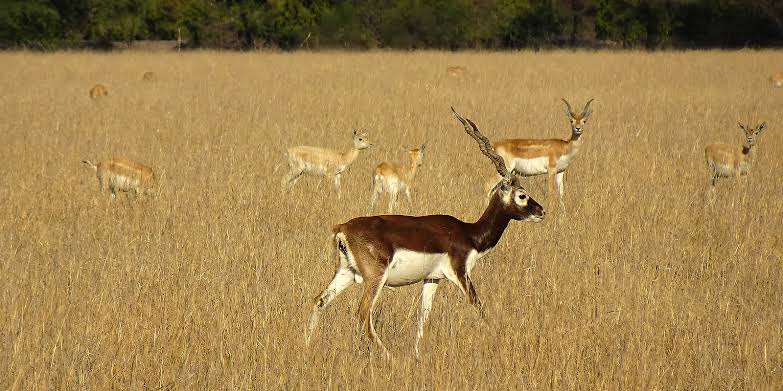
Krishnasaar Conservation Area, a Blackbuck conservation area, remains a unique proposition in the context of conservation areas in Nepal. Located in a small region of 15.95 sq km, it was started to preserve the blackbuck.
For interested visitors, it is located in the Bardia district of Nepal. Krishnasaar was started in 2009 to protect blackbuck. A dream of protecting 9 blackbuck has now turned to 293 in the region. Not only blackbuck, but there has also been protection of other wildlife.
From 64 bird species to 14 mammals, 12 reptiles, you will find enough distinction in the region. Besides this, you will also find distinctive cultural heritage, woodland regions, water resources, etc.
Final Thoughts
There is a major distinction between a national park and a conservation area. As most of the conservation areas can be visited even during the trek, you can plan only the visit to the conservation area too.
What’s more interesting is that the conservation areas are spread across different parts of Nepal, so planning a well-known trek will take you to one of the conservation areas of Nepal.
However, most of the guests get confused about which conservation area to visit, what to expect, and how much time it takes to make the visit. Well, The Trek Nepal would answer all of those queries with ease.
From planning the itinerary for the trek to visiting the conservation area for knowledge and understanding, there is much more to know and appreciate.
If you want detailed information and a well-planned itinerary, feel free to connect with The Trek Nepal.