
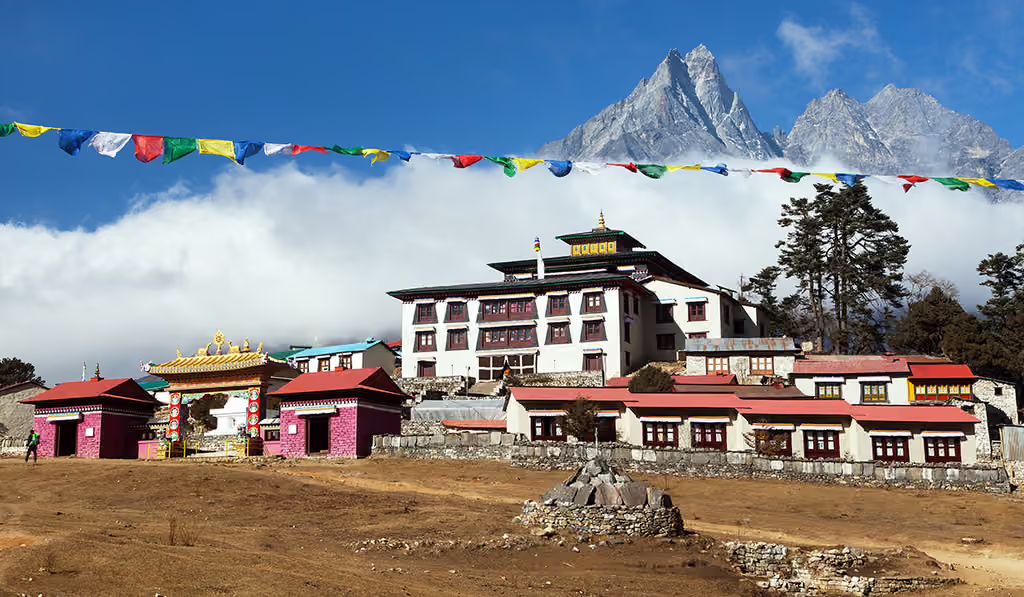
Everest Base Camp trek isn’t only about climbing the tallest mountain in the world, but it is also about the religious and spiritual side of it. The Khumbu, or Everest region, is famous for all the historical monasteries as well.
The monasteries on Everest Base Camp trek are more about the culture and the rich history that remains with it. There are multiple monasteries that serve as a holy spot for the Buddhist community.
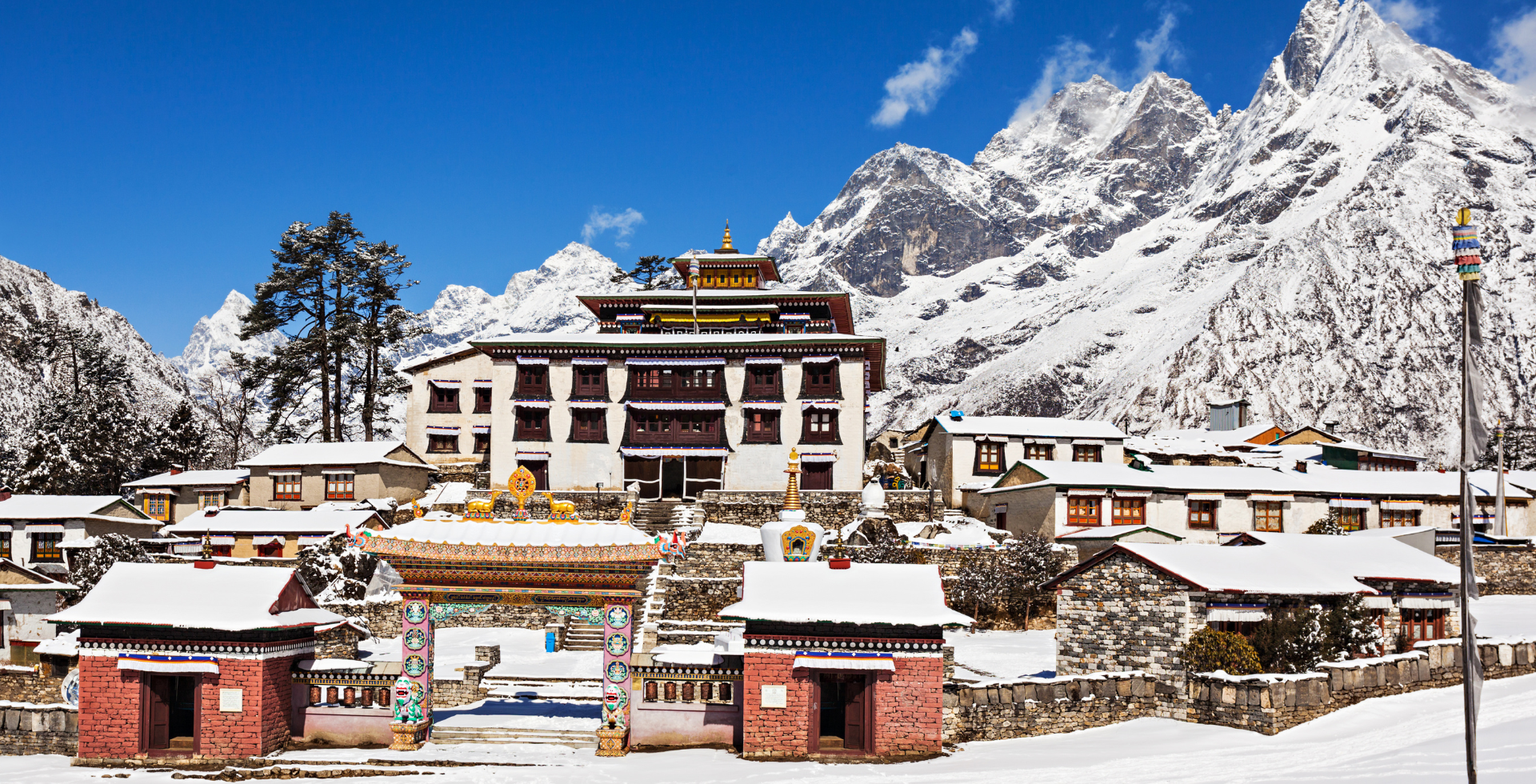
The Trek Nepal, through its experience of the Everest trek, has found that the importance of these monasteries is way higher than what words could explain. Prayer flags, mani walls, and the overall atmosphere are something to talk about.
Through the article, The Trek Nepal would like to talk about the famous monasteries on Everest Base Camp trek.
Tengboche Monastery
The first and most important name in the list of monasteries is the Tengboche monastery. It is one of the oldest and most famous monasteries in the region. If you are planning the EBC trek, you will stop at this place.
Not only for the view but also for the spiritual connection to the place. It is located at an altitude of 3867m with stunning views of Mount Everest, Ama Dablam, Lhotse, etc. It was built in the 1990s and is a strong pillar for Sherpa and Buddhist people.
There are plenty of large statues of Buddha inside the monastery, with wall paintings, old scripts, along with butter lamps. All the trekkers visit the monastery for blessings from the head lama.
Pangboche Monastery
When we focus on monasteries on Everest Base Camp trek, Pangboche Monastery is the oldest monastery in the area. Out of all the monasteries, this is the oldest in the region. Located almost at 4000m, it has a strong Sherpa connection.
Pangboche Monastery was founded by Lama Sange Dorje. Trekkers come to this place to get blessings for the safety of the overall trip. Trekkers will also find a Yeti scalp, which is part of the heritage.
Yeti might not be real, but it adds to the rich history of the place. Sounds of chanting, the prayer flags, along with the religious environment, make staying at the monastery a worthy experience.
Khumjung Monastery
Present in the silence of the Khumjung region, the Khumjung monastery holds a special place in the mind of the Sherpa community. As Khumjung is famous for the Sherpa lifestyle, green fields, and warm community, the monastery is known for its cultural value.
Among the monasteries on Everest Base Camp trek, Khumjung Gumba is calm, serene, and full of stories. You could see the Yeti scalp at this monastery as well. Just to be assured, this monastery isn’t as big as Tengboche or Pangboche but still holds a key place.
Most of the trekkers use this as an acclimatization stop along with relaxation, meditation, and understanding the local culture. Through the visit, you understand more about the Sherpa and Buddhist community.
Deboche Nunnery
Present just below Tengboche, the Deboche Nunnery is an underrated name in the list of monasteries on Everest Base Camp trek. Trekkers can find forests, rhododendron trees, along with rivers and streams around Deboche Nunnery.
Deboche Nunnery is the place of stay for the Buddhist nuns. It isn’t as massive as other monasteries but holds deep value for meditation, study, and learning art and culture.
Unknown to a lot of trekkers, this particular nunnery is one of the oldest in the Khumbu region. This particular nunnery is focused on teaching the young girls and also helps to keep the culture alive.
Thame Monastery
Far from all the noise of the EBC trek, you will find a monastery with rich history and culture. Yes, we are talking about Thame Monastery. Present in the quiet village of Thame, it is surrounded by mountains all around.
With its strong connection to Sherpa history, along with climbers like Tenzing Norgay Sherpa living in the village, Thame Monastery has some rich connections and history. Interestingly, this monastery also hosts the famous Mani Rimdu festivals.
It is one of the key festivals in the Khumbu region. Inside the Thame monastery, you will see colorful paintings, prayer books, statues, and other memories that resemble the Sherpa culture and Buddhist following.
Rimishung Monastery
Let’s take you back to the start of the EBC trek to talk about monasteries on Everest Base Camp trek. Yes, Rimishung Monastery is one of them. Set in the beautiful setting of Phakding, this monastery provides a beautiful, lush green forest, farming terraces, and snow-capped peaks.
As you enter the Everest region, this is the first monastery you are going to encounter. From prayer flags to detailed murals, mani walls, and wheels, the monastery has great historical value.
Daily puja and meditation are carried out by monks and nuns in the monastery. This particular monastery is part of the Nyingma Sect, but nobody knows its established date. Some historians believe that the monastery was built in the 16th century.
Namche Bazaar Monastery
In the vibrant Sherpa town lies a monastery that is the pit stop for every trekker. Namche Bazaar monastery marks the start of the EBC trekking journey. The proper place for acclimatization, Namche Bazaar Monastery provides culture, rush, and the beauty of the Khumbu region.
This particular monastery is the spiritual center and a cultural landmark of the overall journey. This place attracts both local and international tourists who mark for EBC trek.
Inside the monastery, you will find wooden architecture, ornate murals, statues of deities, and everything that oozes cultural beauty. There are plenty of other monasteries in and around Namche Bazaar monastery.
Pema Namding Monastery
Not at a higher altitude but only at 2610m, the Pema Namding monastery also comes under monasteries on Everest Base Camp trek. It is located in the silent village of Ghat. Anyone who is planning for the EBC trek will pass through this monastery pretty early.
This is a new monastery built in 2008, which contains plenty of Buddhist treasures. Along with the fresh architecture and old energy, you will have a complete understanding of the Buddhist community here.
From thangkas, prayer wheels, statues, mani walls, and everything in between, you will have an experience to remember. This particular place was built by Ngawag Jigdral Rinpoche to share compassion and wisdom.
Khunde Monastery
The last name in the list of monasteries on Everest Base Camp trek is the Khunde Monastery. It lies at an altitude of 3840m, which provides peace and silence from the noise of the EBC trek.
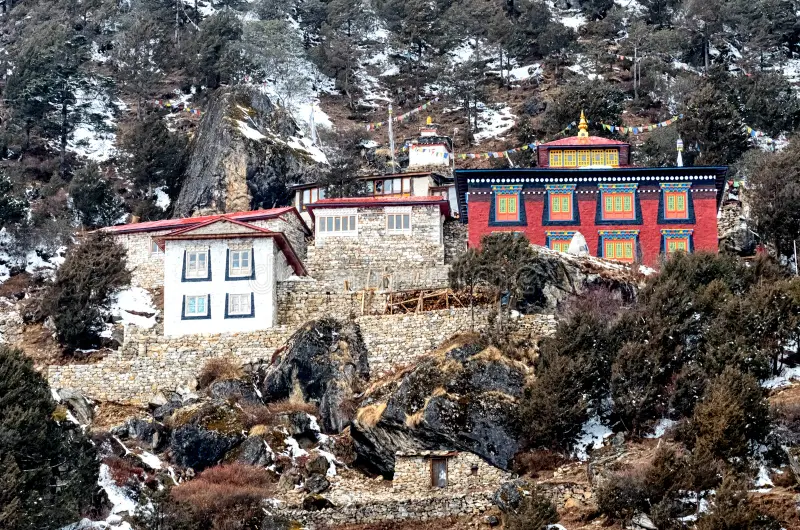
You can find peaks all around this monastery, which makes the setting more vibrant and beautiful. As you feel tired and worn out from the trek, you come to Khunde to find rest and peace.
There is a variety of rhododendrons blooming in the season, with Khunde Hospital close by. It reminds us of Sir Edmund Hillary. Anyone is free to come in and have their rest, read, understand, and meditate. This makes Khunde a must-stop destination.