
Anidesh Chuli or White Wave Mountain is located in the Eastern part of Nepal. Typically, in the Kanchenjunga mountain region, this particular mountain forms the border between Nepal and Tibet.
Anidesh Chuli climbing is one of the rarest sights, as there have been only limited attempts to the top. Passing through the Kumbhakarna glacier and the likes of Ramtang glacier, this particular peak provides you with a new opportunity.
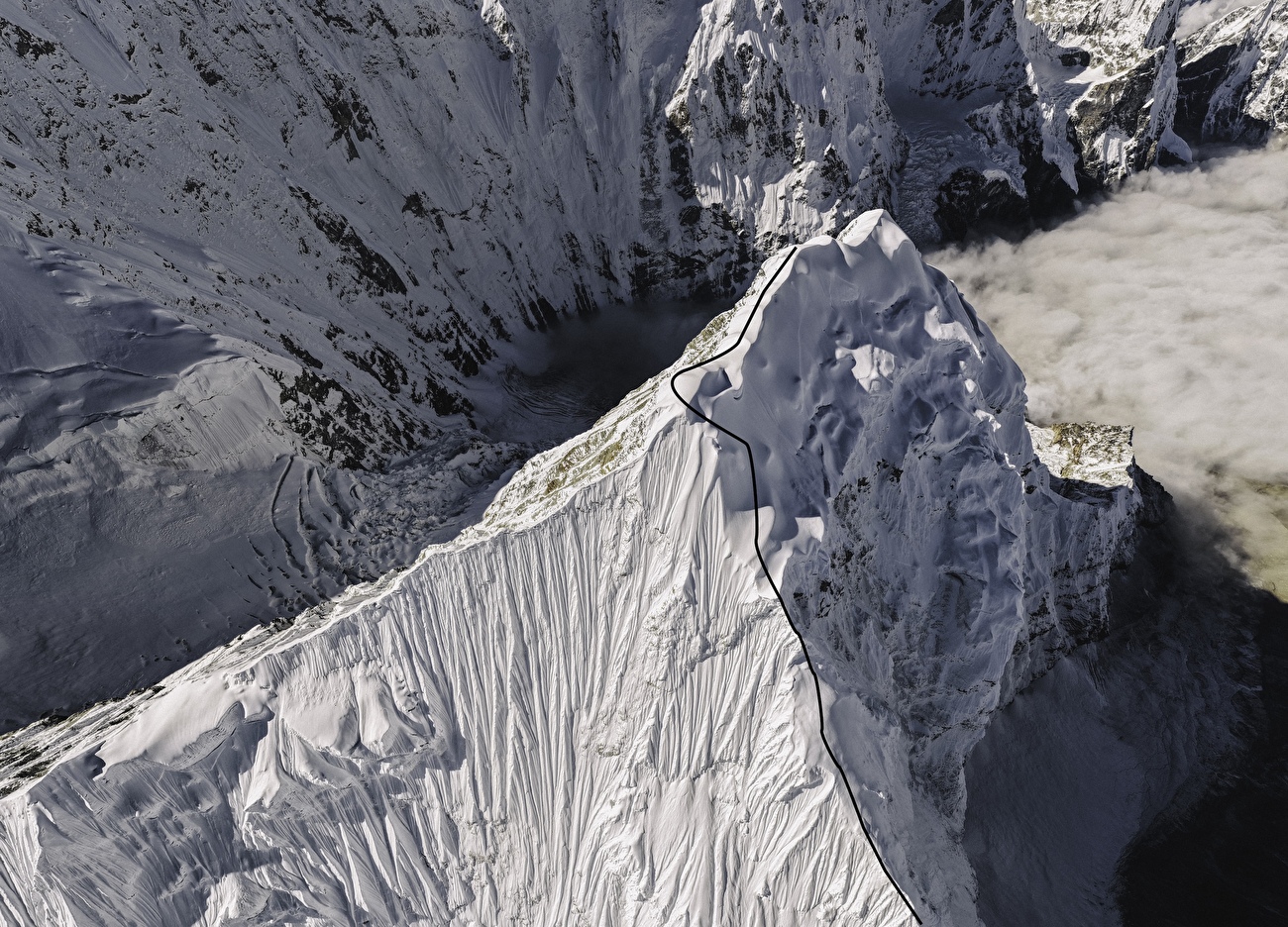
To the readers unaware, this peak was first opened in the 2000’s and since then has been a famous spot. However, not a lot of climbers are interested in Anidesh Chuli. It is due to the presence of Kanchenjunga Mountain up close that Anidesh Chuli climbing tends to get overlooked.
Anidesh Chuli Climbing Overview
Anidesh Chuli is located at an altitude of 6808m. Present closer to the Kanchenjunga mountain region, climbers will get less focused on Anidesh and more focused on Kanchenjunga.
One of the technically challenging and less commercialised climbs, Anidesh Chuli climbing requires major skills and experience to do this trek. With an experienced team like The Trek Nepal, we will help you to reach the top with ease.
Anidesh Chuli is the Nepalese name; however, the English name for this peak is White Wave. The climb to Anidesh was allowed only in 2002 for the local people.
History of Anidesh Chuli Climbing
In case you are wondering, the first climb to Anidesh Chuli was done way too early. The first attempt to climb Annapurna South was made by New Zealand climbers. The team of Ben Dare, Anrei Dusschoten, Rob Frost, and Scott Scheele.
But the lack of porters and even the guides made this attempt unsuccessful. Even though they reached the Ramtang glacier, the push to the top was almost impossible.
Interestingly, the first successful climb to the top was made on 26th September, 2025. This attempt was clearly possible by Benjamin Vedrines and Nicolas Jean.
Surprisingly, this climb was possible on a single day through the north ridge. The strong mindset and the willpower of Benjamin and Nicolas made this attempt possible.
Anidesh Chuli, climbing for the first time climbing was done in alpine style without oxygen and Sherpa support. Although it was a difficult climb, the mixed terrain and steep snow didn’t stop their progress.
Highlights of Anidesh Chuli Climb
- Explore the remoteness and untouched nature of Anidesh Chuli
- Views of mountains like Kanchenjunga on the way
- Chance to climb one of the rare peaks in the country
- Enjoy the Sherpa and Tibetan culture right through your stay in the Anidesh region.
Cost of Anidesh Chuli Climb
Even though Anidesh Chuli climbing is one of the rarely climbed peaks, the cost of the overall journey tends to get higher. This is due to remoteness and the lack of commercialisation of the place.
On average, you will have to pay between $3000-$5000. The overall cost, however, depends upon the time of the year and the quality of the service.
Selection of the favorable seasons, like spring and autumn, means that the cost will be lower. On the other hand, the winter and monsoon season gets the cost.
The cost of Anidesh Chuli climbing also differs depending on the quality of service you take. Selection of the private service means that the cost will surely go higher.
Best Time to Perform Anidesh Chuli Climbing
Similar to a lot of other treks in the country, the best time to perform the Annapurna Chuli climb is during the months of spring and autumn. All the climbers will have an opportunity to witness the real beauty of the trek.
Spring falls during the months of September to October, while autumn is from March to May. During these months, the weather remains clear with the most beautiful views.
Being in the remote region of the trek, choosing the right season is key. In other periods, like winter and monsoon, the roads get slippery. The views of the mountain and chances of snowfall are also higher. This makes the overall experience pretty bad.
Permits Required For Anidesh Chuli Climbing
Permits are the key, even if your trekking zone is commercialised or not. Most of the time, you will find the information related to the permit with the Nepal Tourism Board.
In order to get all the permits, though, you can either connect with the Nepal Tourism Board or the local municipality. But in the case of permits, the permits needed for Anidesh Chuli’s climbing are:
- Trekkers Information Management System (TIMS) card
- Annapurna Conservation Area Permit
Alternative treks to Annapurna Chuli Climbing
Not all climbers and trekkers are interested in climbing Annapurna Chuli. However, if you are looking for something new, there are plenty of alternative trekking options.
 These options are based on the time, commercialisation, and the quality of service that you will receive. As Anidesh Chuli’s climb isn’t the highly commercialised option, climbers aren’t interested in it.
The quality of service and the cost could also be higher for this journey. Therefore, some of the well-known alternative trekking options include:
- Cholatse climb
- Chulu East Climb
- Singu Chuli climb
- Annapurna III climb, etc
Key Things To Focus On Before Performing Anidesh Chuli Climbing
Right through the article, we have talked about how tough or remote the Anidesh Chuli climbing is. All of these assumptions are made based on the lack of distinct trails in the journey.
The key consideration that needs to be made includes the remoteness of the place. This trek lies in the Eastern part of Nepal with challenging trails.
You will need to have technical skills to complete this trek. Other than that, a team like The Trek Nepal will be key to properly planning and executing the overall experience. Regular guidance and proper supervision need to be maintained for this journey.
Based on the overall time of the trek and the season, you will need to pack the right set of clothes as well. Overpacking and underpacking tend to increase issues for the climbers.
Before signing up for the Anidesh Chuli climbing, try to have basic peak climbing experience. This will put the climber in the right mindset and physical abilities.
Anyone who is still confused about whether they should perform this trek or not can contact The Trek Nepal. From explaining the itinerary to creating a package based on your budget, we do it all.
Detailed Itinerary About Anidesh Chuli Climbing
Day 1: Arrival in Kathmandu (1,400m)
The Anidesh Chuli climbing begins in Kathmandu, where you arrive and transfer to your hotel. This day is dedicated to rest after international travel and initial expedition preparation. In the evening, a briefing session is conducted with your climbing team, covering route overview, weather expectations, and gear verification for the high-altitude climb ahead. Final permit processing for the Makalu region expedition is also reviewed.
Day 2: Expedition Preparation Day in Kathmandu (1,400m)
This day focuses on logistics for the Anidesh Chuli climbing. Equipment is checked and organized, high-altitude food supplies are packed, and technical gear such as ropes, ice axes, and climbing hardware is double-verified. Expedition leaders also finalize the transport schedule for eastern Nepal. The rest of the day is spent acclimatizing to the rhythm of preparation before heading into the Himalayas.
Day 3: Fly Kathmandu to Tumlingtar (410m) and Drive to Num (1,560m)
A morning flight takes you from Kathmandu to Tumlingtar Airport, a gateway to the Makalu region. From here, a long jeep drive follows the Arun River valley through terraced hills and rural settlements. The route passes through small villages and suspension bridges before reaching Num. This marks the beginning of the trekking approach toward Anidesh Chuli.
Day 4: Trek from Num to Seduwa (1,500m)
The trek descends steeply through forests and river valleys before crossing suspension bridges over the Arun River. You enter the Makalu-Barun conservation area checkpoint, where permits are verified. The trail then climbs gradually to Seduwa, a small Sherpa and Rai settlement surrounded by lush hills and waterfalls. This section helps warm up the body for higher elevation gain ahead.
Day 5: Trek Seduwa to Tashigaon (2,100m)
The trail ascends through dense rhododendron forests and terraced farmland. You pass small rural homes and mani walls as the landscape becomes more alpine. The day ends at Tashigaon, the last permanent village on the route. From here onward, human settlements disappear, marking entry into high wilderness.
Day 6: Trek Tashigaon to Khongma Danda (3,500m)
This is a steep and physically demanding ascent through forests that gradually transition into alpine terrain. Stone staircases lead toward ridgelines offering views of the Makalu range. You reach Khongma Danda, a high camp area surrounded by peaks and prayer flags. This is a key acclimatization point before entering glacier zones.
Day 7: Acclimatization at Khongma Danda (3,700m hike)
A rest and acclimatization day is spent hiking to nearby ridges and glacial viewpoints above Khongma Danda. The surrounding peaks of the Makalu-Barun region become visible. This helps prepare the body for the high-altitude demands of the Anidesh Chuli climbing. Return to the same camp for overnight rest.
Day 8: Trek Khongma Danda to Dobate (3,650m)
The route crosses several high passes, including Shipton La and Keke La, offering dramatic Himalayan views. You descend slightly into alpine basins before reaching Dobate. The terrain becomes more rugged and isolated, signaling entry into expedition-level environments.
Day 9: Trek from Dobate to Yangle Kharka (3,600m)
The trail descends through rocky valleys and follows the Barun River. Waterfalls, cliffs, and glacial streams dominate the scenery. You arrive at Yangle Kharka, a wide grazing valley used by yak herders. This is a major staging point before reaching Makalu Base Camp.
Day 10: Trek Yangle Kharka to Makalu Base Camp (4,870m)
The landscape becomes increasingly glaciated as you move closer to the core Himalaya. The trail passes moraines, icy streams, and barren rock zones. You finally reach Makalu Base Camp, situated beneath the massive face of Makalu. This serves as the main expedition headquarters for the Anidesh Chuli climbing.
Day 11–13: Acclimatization and Route Preparation (Up to 6,000m+)
These days are dedicated to climbing preparation. Rotational hikes are done above base camp, establishing higher camps toward Anidesh Chuli’s approach ridge. Technical training includes ice climbing, rope fixing, and glacier travel practice. The expedition team studies snow conditions and avalanche-prone zones carefully before committing to the summit route.
Day 14: Establish Advanced Camp (Approx. 6,200m)
The route toward Anidesh Chuli is pushed higher with the establishment of an advanced camp on glacier terrain. Climbers navigate crevasses and steep snow slopes. This camp becomes the launch point for the summit attempt. Weather windows are closely monitored due to the technical nature of the climb.
Day 15: Summit Push – Anidesh Chuli (Approx. 6,800–7,000m)
The summit attempt begins early in the night. Climbers ascend steep snow and ice slopes with fixed rope assistance where necessary. Exposure and altitude make this the most demanding day of the expedition. Reaching the summit of Anidesh Chuli climbing offers panoramic views of the Makalu massif, Baruntse, and the surrounding remote Himalayan ranges. After a brief summit stay, descent is made back toward Advanced Camp or lower.
Day 16: Contingency Day
This buffer day is reserved for weather delays, route fixing, or a second summit attempt if required. In high-altitude expeditions like Anidesh Chuli, flexibility is critical for safety and success.
Day 17–21: Descent to Tumlingtar (410m)
The team retraces the route through Makalu Base Camp, Yangle Kharka, Dobate, Khongma Danda, and back to Tashigaon and Seduwa. The descent is faster but physically tiring after high-altitude exposure. Forests and river valleys gradually reappear as you exit the high Himalaya. Eventually, you reach Num and drive back toward Tumlingtar.
Day 22: Flight Tumlingtar to Kathmandu (1,400m)
A morning flight returns you to Kathmandu, completing the Anidesh Chuli climbing expedition. The contrast from alpine isolation to the city environment marks the end of the journey.