
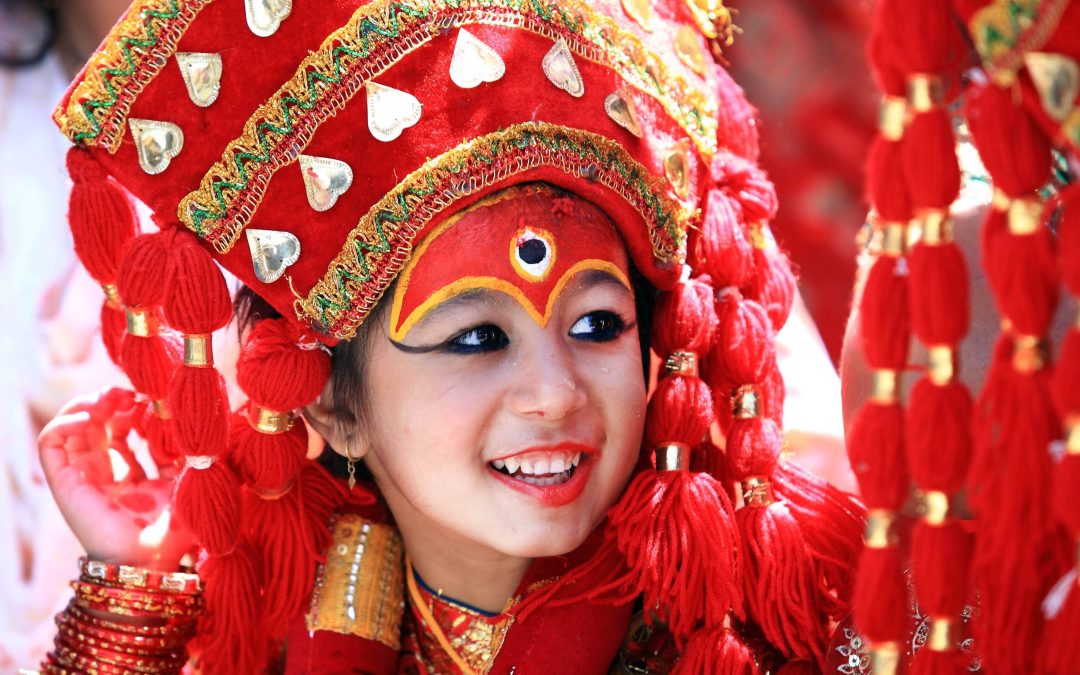
When we talk about Nepal, stories emerge one after another. However, the most fascinating one has to be that of Kumari. Kumari the living goddess of Nepal, is one of the most respected goddesses in the country.
She is one of the rarest living goddesses in the world. People from all around the world come to Nepal so that they can get her blessings. She is also the manifestation of Goddess Taleju, which makes her very powerful and spiritual. Kumari is believed to have the added power of the Kali Goddess.
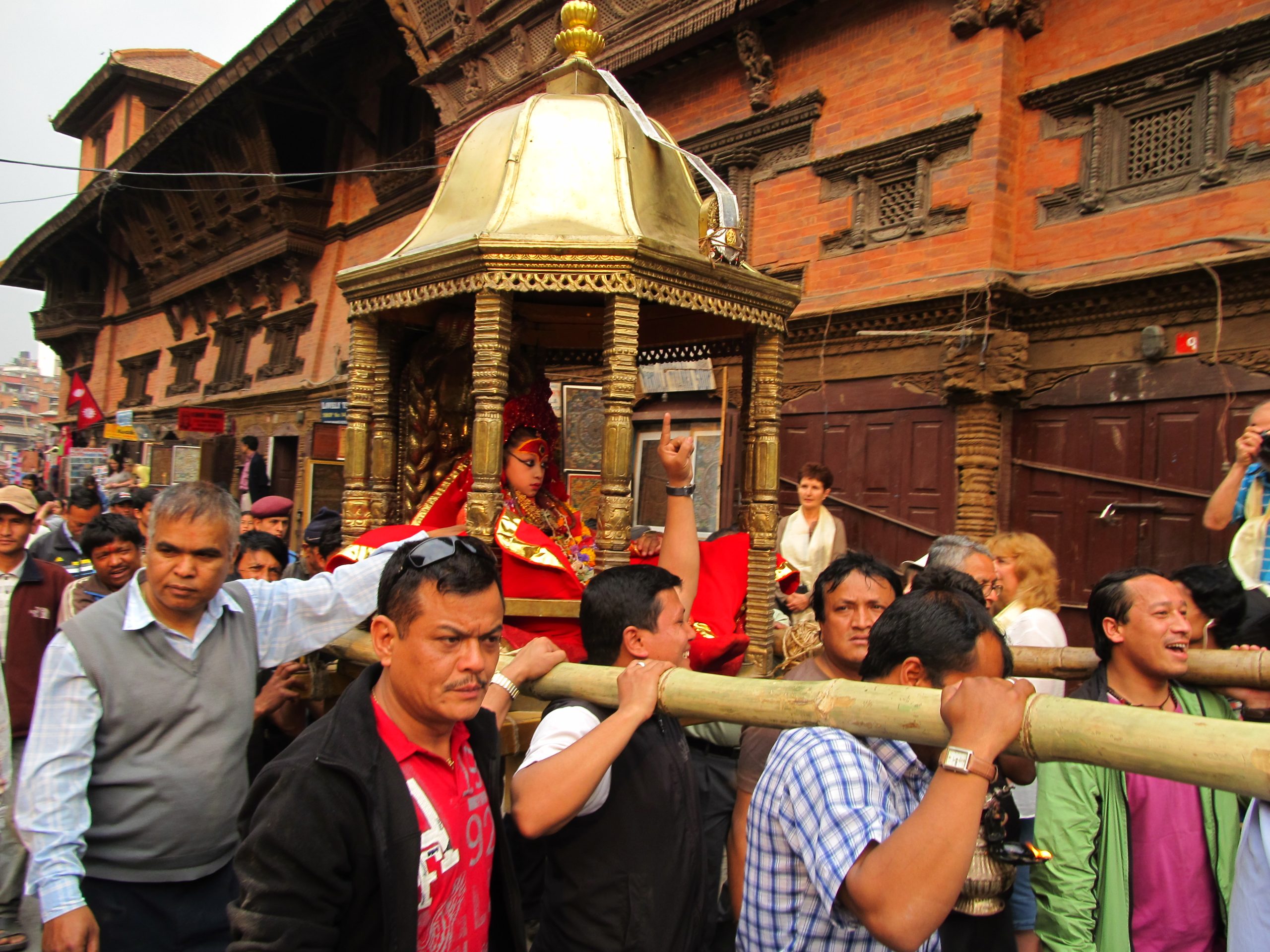
Mostly, Hindu and Buddhist people highly respect this culture. In Nepali, Kumari refers to a virgin. Any girl who wants to be Kumari needs to be very strong and pure. Along with that, she has to live away from her common home and be Kumari until her periods come for the first time. Today, let’s know about this in detail.
History of Living Goddess Kumari
The history of Goddess Kumari is different and unique. There are various stories, but The Trek Nepal would like to tell you the real story. The last king of the Malla dynasty, Jaya Prakash Malla, came across Goddess Taleju, who visited his chamber as a beautiful woman during the night.
Interestingly, she promised to visit the king every night to play Tripasa if he kept these meetings a secret. The wife of Jay Prakash Malla followed her one night. Taleju was offended by it and left. She never came back to meet the king.
However, Goddess Taleju came in the dream of King Jay Prakash Malla and promised him that she would reincarnate as a living goddess, being a child from the Newar community. Taleju also said that the baby girl should be from the Shakya or the Bajracharya family.
The last Malla King went on the search to find the perfect child, and Kumari the living goddess of Nepal, came into existence. A house was built for her accommodation, known as Kumari Ghar. During the rule, even the king used to take blessings from Kumari.
How Is Kumari Selected?
Readers might be thinking, How is Kumari the living goddess of Nepal, selected. Well, it is no joke to select a Kumari as it requires a detailed search. There is a specific council created by senior Buddhist Bajracharya that makes the rule.
The selection of Kumari has to fall under the guidelines provided, making it an interesting choice. The Chief Royal Priest, Priest of Taleju Mandir, and Royal Astrologer have to agree on a particular Kumari so that she can be chosen.
Finalisation of Kumari the living goddess of Nepal goes through 32 criteria which are known as perfection of goddess. Out of all the qualities, some of the key qualities include:
- Eyelashes similar to those of a cow
- Thighs like those of a deer
- Highly black hair and eyes
- Chest like a lion
- Voice soft and clear as a duck
- Body like a Banyan tree
- Same horoscope as the king, etc.
Things get heated up as the test goes on for a period of Kalrati. It is the 9 day of Dashain. The final test is very tough. The Kumari has to spend a night with 108 heads of buffalo and goats that are sacrificed.
All of them are lit by candles. Similarly, some people make the noise to check whether she gets afraid or not. If not, we have our Kumari as selected. Upon selection, she is taken to Kumari Ghar, where she will live an isolated life with all the facilities inside.
Facilities at The Kumari House
Kumari the living goddess of Nepal, seems to be having a tough life. She will be living isolated from her family and relatives in Kumari Ghar. One key rule is the fact that Kumari can meet her family members on special occasions 13 times over the year.
The chosen Kumari will get a formal education inside the house. Kumari House, in general, is an old palace building with basic facilities and comforts of the modern world. The whole day needs to be spent behind 4 walls lit with candles and lamps.
Moreover, Kumari needs to have a high level of dedication and sacrifice for the country, which isn’t easy at all. Don’t be surprised to see that so many big royalties and political leaders visit Kumari even today.
Life After Being Chosen: A Kumari
There is a major misconception that Kumari the living goddess of Nepal, has a hard time normalizing after being chosen for the position. Well, that is a myth. She has to follow strict rules and remain under the guidelines, which is a reality.
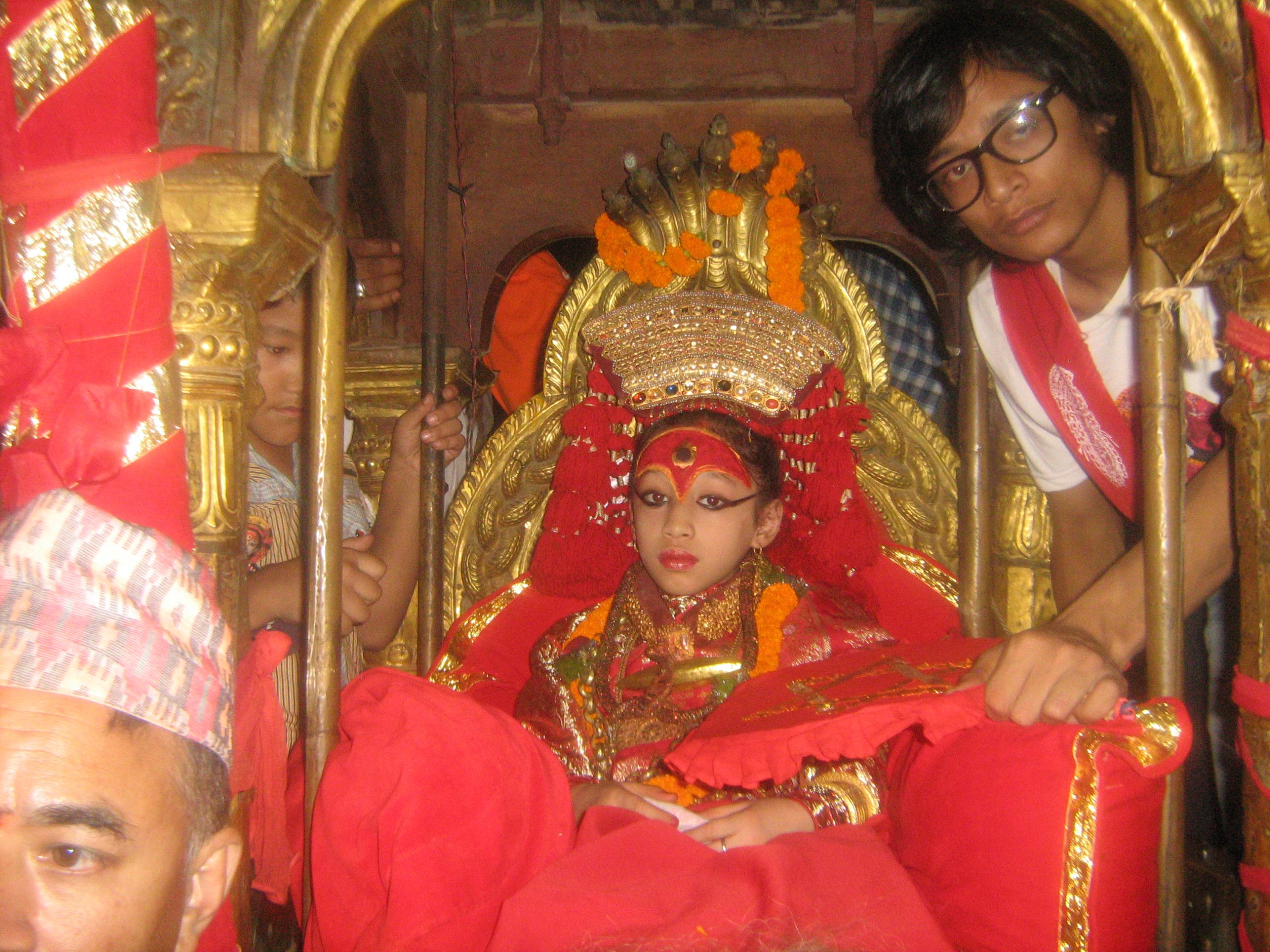
Little body movement with seriousness on her face, no opportunity to touch the ground besides the place of her worship, no permission to touch another god, as she is a goddess herself.
Likewise, Kumari is taken care of by their personal caretaker in a palanquin. A Kumari goddess isn’t allowed to see blood as she is a goddess. Not only through periods, but a Kumari can’t spill blood on earth, as it is considered bad for the country.
The main reason for no blood spill is that she is termed as power or Shakti, so dropping any blood will make her impure. Even though Kumari is a child, she has all the potential to be a woman.
What Does Kumari Represent For Nepalese People?
Anyone interested to know, a Kumari is a connection between the Hindu and Buddhist communities. She is the incarnation of Goddess Taleju and symbolizes purity, divine power, and protection at the same time.
Moreover, there is also a spiritual connection between the Hindus and Buddhists, which allows for the Nepalese religious and cultural heritage. Kumari the living goddess of Nepal, is tasked with maintaining the religious harmony in the country.
Anyone who gets the blessings of Kumari is known to be blessed with prosperity, push off evil energy, and also maintain harmony among the community.
It is a sacred tradition in the context of Nepal that keeps Nepal’s identity, deep-rooted culture, and spiritual beliefs alive in the modern world.
If you want to know in detail about Kumari the living goddess of Nepal, contact The Trek Nepal, as we provide you with every detail.