Trekking in Nepal might be one of the rewarding activities to perform, but the hidden costs tend to make things harder most of the time. There are plenty of hidden trekking costs that people dont talk about.
Even though the trekking agency warns you about what is to come, there are unknown circumstances that come forward during the trek.
One of the many reasons why the hidden costs get higher is due to the fact that we overlook the smaller costs. The sum of these smaller costs tends to make the overall cost spike up.
The Trek Nepal would like to warn all the readers about hidden trekking costs that might come forward and make you aware before your next trek.
Medical expenses at higher altitude
One of the underrated and less talked hidden trekking costs in the context of Nepal is the medical cost. Yes, you read that right. Readers might think that a trekking agency would provide all the medical assistance; well, that isn’t possible.
When you go to a higher altitude, there is a major chance of altitude sickness and other issues. Medical assistance at higher altitudes generally costs you double of what you could get in Kathmandu. All of this adds up to unknown costs.
Extra food costs
The Trek Nepal provides you with three meals a day. Other than that, most of the items you consume need to be paid extra. In the quest for fresh fruits, coffee, bakery items, and sometimes drinks, the cost gets pushed.
Not only that, hot drinks in cold weather could be a must at times. These drinks and food dont come cheaper above 3500m. It is these factors that get the costs higher.
Charging the electronics
When we talk about hidden trekking costs in the context of Nepal, the charging costs also play a leading role. As social media has been a key factor in the modern day and age, a full charge in electronics is key.
When you go for the Annapurna trail or the Khumbu region, you might have to pay around 600 NPR per full charge of 1 device, which is pretty expensive. Besides camera battery charge, a power bank and phone might cost you around 12000, which is higher.
Hot shower and rooms
The temperature at an altitude above 4000m is always low. As a result of that, everybody loves a hot shower. But the hot shower doesn’t come for free. Any trek in the context of Nepal goes beyond a week or 2.
Therefore, hidden trekking costs in Nepal are found even on hot showers and hot rooms. It will cost you between $3 and $7 per shower and $50 if the trek is over a week. This adds much more for hot rooms.
Extra porter costs
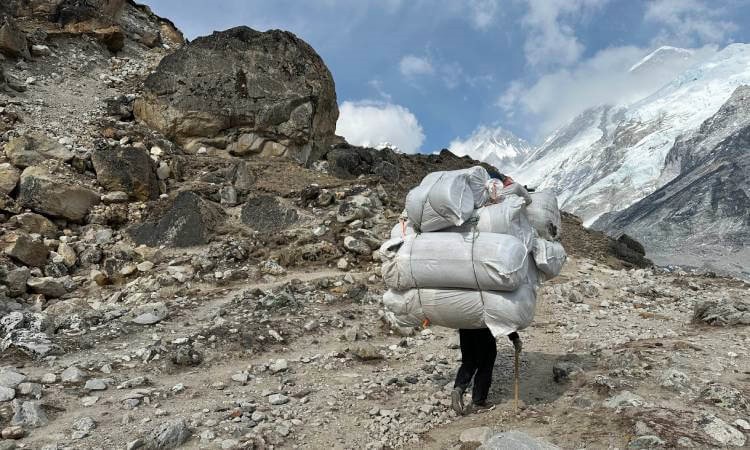
Nepal Tourism Board guides trekking agencies stating that you should hire one porter for 2 trekkers, but the ground reality is different. Modern-day trekking has a lot of technology, which tends to maximize the cost.
From personal luggage to camera equipment and personal belongings, one porter is never enough. The case of medical illness might land you with a new porter. A porter at higher altitude doesn’t come in cheap. Therefore, the cost goes up.
Helicopter rescue and evacuation
This is one of the rare ones, but it can’t be ignored either. When we are focusing on hidden trekking costs in Nepal, helicopter evacuation is the most expensive one.
You will be surprised to know that even with insurance coverage, the cost is groundbreaking. One helicopter rescue would cost you between $3000-$6000, which isn’t a cheap number.
This cost sometimes goes beyond that depending upon the time of the year, weather, altitude, and other factors. If you are planning for peak climbing, The Trek Nepal strongly suggests you get the insurance sorted.
Buffer Days Cost
Any trekker who is planning for the Khumbu region has to go through the Lukla region, and that is a problem. Most of the time, weather is a major issue.
In the end, there are flight cancellations and delays at the same time. This results in extra stay, extra charging, extra food, and an increase in costs. For hidden trekking costs in Nepal, 2-3 days delay is common based on the weather conditions.
Pre trek and post trek days
The last yet most important hidden trekking costs in Nepal are the pre-trek and post-trek costs. Most of the readers might be confused, but this cost is higher.
Right before you head out to the mountains and the extra day you spend in Kathmandu, the cost meter tends to go higher. Exploring Kathmandu through UNESCO World Heritage Sites, eating daily, and also having fun with art visits could cost you a fortune.
More than that, tourists tend to buy souvenirs for their loved ones, which isn’t cheap either. This cost tends to get overlooked most of the time, which brings the final bill on the higher side.
Final Thoughts
It doesn’t matter how experienced a trekker you are; the cost of the trek can never be the same in the end as it was expected at the start.
Having said that, there is always a tentative cost that will be new in every trek. The Trek Nepal, through thousands of treks have seen scenarios where the budget hasn’t been enough.
As a result of that, we suggest all the readers and fellow trekkers to cut costs as much as possible. Even though Nepal seems cheap for trekking, it is the hidden costs that have different things to say.
What we suggest to you is to take the shared option as much as possible. Even on the shared itinerary, the cost spikes, so the cost of private service is always on the higher side.
Try to set a limit on your budget so that you will know the ceiling. Being an international tourist, the cost will presumably be on the higher side.
If you are still confused and unsure, try and connect with The Trek Nepal. Not only will we plan the right itinerary for you, but we will also help you with the hidden costs and the information on how to handle them.