
Nepal is home to some of the tallest peaks in the world. Not only that Nepal is Nepal home to some of the rarest peaks that we don’t talk about. The Amotsang Himal climb is one such opportunity for everyone.
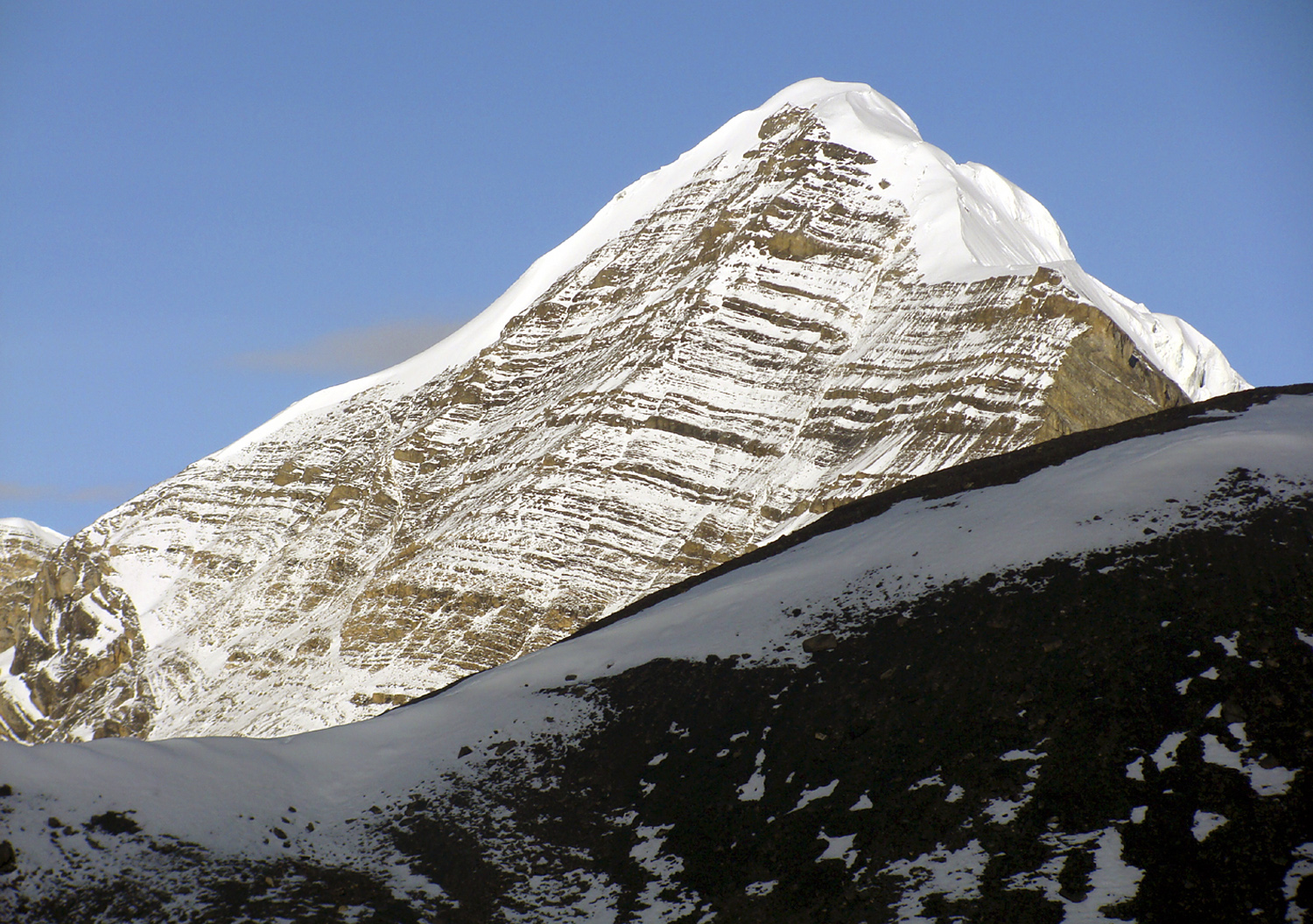
The Trek Nepal recently started its journey to Amotsang Himal, and the results are wonderful. Located in the Western region of Nepal, Amotsang truly shows the beauty of the Manang region. Let’s dive deep to understand what the Amotsang Himal climb actually means.
Amotsang Himal Climb Overview
Amotsang Himal is located in the Damodar mountain range. Typically known for its remoteness, Amotsang is located in the western region of Nepal.
This particular peak stands at an altitude of 6392m. Often known for the rarest peak climbed, Amotsang is present in the Nar Phu municipality.
As the Nar Phu valley trek is more famous, you tend to miss the Amotsang peak climb most of the time. Even though Amotsang isn’t too famous, it is a difficult trek for a new climber.
Highlights of Amotsang Himal Climb
- Explore the beauty of the Nar Phu Valley
- Chance to understand the local Sherpa and Tamang culture
- Witness the rare animals and plants present atthe Annapurna Conservation Area
- Visit the beautiful Manang region and understand the culture
Best Time To Perform Amotsang Himal Climb
Like a lot of other treks and climbs in Nepal, Amotsang is also better during the spring and autumn seasons. Located in the remote region of Nepal, choosing the right season and weather is the key.
Autumn season falls during the months of September to November, while spring falls during the months of March to May. All of this results in the right season with greater results.
The mountains are stable with clear skies. Not only that, but you also have an opportunity to witness the beautiful mountains. With no stoppage during the trekking times, you get to enjoy the best experience.
However, the climb to Amotsang isn’t impossible even during the season of winter and monsoon. The roads are slippery, and the weather keeps on changing.
But if you have the right experience, you can perform this trek even in tough conditions. Anyone with no experience should choose the right season for this trek.
Permits Required for Amotsang Himal Climb
Even though the Amotsang Himal climb isn’t the most commercialised climb in the country, you have to get the right permit for this.
Located in the Manang region, the permits are also similar compared to those of any other Manang climb. All of the permits can be received either from the Nepal Tourism Board or the local municipality.
However, if you book The Trek Nepal for the journey, we will take care of all the permits. The information required for the Amotsang Himal Climb is:
- Annapurna Conservation Area Permit
- Upper Mustang Restricted Area Permit
- Trekkers Information Management System Card
Cost of Amotsang Himal Climb
As Amotsang Himal climb lies in the less commercialised and remote region of Nepal, the overall cost of performing this climb is pretty high.
All the service and the things required for a period of over a month needs to be taken care so the cost rises higher. On average, the cost of the Amotsang Himal Climb is around $5000.
This cost is totally dependent upon the quality of service you look for. The Trek Nepal will take care of almost everything under this cost.
However, if you look for private services, the cost tends to differ. You will find a higher cost for it. With The Trek Nepal, though, we also perform customized packages, which help to accommodate the cost.
Food and Accommodation During the Amotsang Himal Climb
Located in the remote regions of Nepal, the Amotsang Himal climb provides a challenge in itself. All the trekkers will spend most of their time in the mountains. Not only that remoteness of the region could be a challenge in itself.
With The Trek Nepal, we will arrange all the necessary services. However, the stay will mostly be at the teahouses and the outside tents. In the case of food as well, all the climbers will get basic Nepali food.
The foods will be rich in carbohydrate which will help you to trek for more than 7 hours every other day. Having said that, the food will be typical Nepali dishes like Daal, Bhaat, Momo, noodles, and other options.
The food will be full of love and organic. All the food consumed by the trekkers will be locally grown by the community. On the other hand accomodation will be basic.
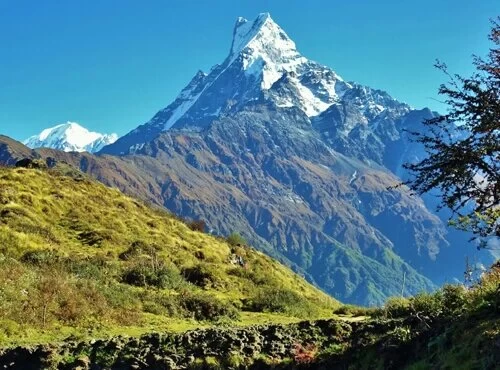 Trekkers will be spending nights at the local teahouses amongst the people from the community. Along with that, the beds and the blankets provided will all be basic.
Cleanliness and hygiene will be taken into major care during the stay. Having said that, shared toilets, limited hot water, and basic electricity powered by solar will be used.
Booking with The Trek Nepal, we will take care of the sleeping bags and other facilities, which will be included in the overall package. The feature of twin sharing bed will also be the keen focus.
Why should you book with The Trek Nepal?
If you have come this far, you might be thinking, why should we book with The Trek Nepal for Amotsang Himal climb? Well, the answer is simple. It is due to the quality of service that we provide, which makes the overall difference.
We have been working in the field of trekking and mountain climbing for decades now. Over a long period of time, the quality of service and the number of satisfied trekkers have increased in the case of The Trek Nepal.
What makes us even more special is that we provide a customised package for the clients. Based on your budget and time, the quality of service and the time for the trek can be changed.
This provides you with the flexibility to book the package based on your requirements. Other than that, The Trek Nepal follows the zero-waste concept, which not only saves the environment but also helps us to enjoy the overall journey.
Our team of experts has experience in all aspects, from training, medical, cooking, and other sectors for trekking. All of this works together to make your experience worth every second.
Detailed Itinerary About Amotsang Himal Climb
Day 1: Arrival in Kathmandu (1,400m)
Arrive in Kathmandu and transfer to your hotel. After rest, you meet your expedition team for a full briefing on the Amotsang Himal climb, including route planning, safety protocols, and logistics. Final gear checks and permit preparations are completed to ensure readiness for this remote expedition.
Day 2: Fly to Nepalgunj (150m)
A short domestic flight takes you to Nepalgunj in the lowland Terai. The warmer climate contrasts sharply with the mountains ahead. This day is used for staging cargo, organizing food supplies, and preparing for the remote Dolpa entry point of the Amotsang Himal climb.
Day 3: Fly to Juphal and Trek to Dunai (2,850m)
You take an early mountain flight to Juphal Airport, where the trek begins. Descending through terraced hillsides, you follow the Thuli Bheri River to reach Dunai, the administrative hub of Dolpa. This marks the transition from travel into the expedition trekking phase.
Day 4: Trek from Dunai to Tarakot (2,540m)
The trail follows a historic trade route along the Bheri River, passing through narrow gorges and small settlements. You reach Tarakot, a culturally rich village with an ancient fortress, offering insight into the region’s history while gradually adjusting to altitude.
Day 5: Trek from Tarakot to Laini (3,160m)
Moving deeper into remote terrain, the trail narrows along cliffs and crosses suspension bridges over roaring rivers. The landscape becomes more rugged as you ascend toward Laini, a quiet riverside campsite used by trekkers and herders.
Day 6: Trek from Laini to Nawarpani (3,545m)
The path climbs steadily through a dramatic canyon with occasional landslide sections. As vegetation begins to thin, the high Himalayan environment becomes more apparent. You reach Nawarpani, a small but important stop for acclimatization.
Day 7: Trek from Nawarpani to Dho Tarap (4,040m)
The valley opens into a wide plateau as you arrive at Dho Tarap, one of the highest permanent settlements in Nepal. The village is rich in Tibetan Buddhist culture, with monasteries and prayer flags marking the landscape. This is a key acclimatization point for the Amotsang Himal climb.
Day 8: Acclimatization at Dho Tarap (4,500m)
A rest and acclimatization day includes short hikes to nearby ridges above Dho Tarap, allowing your body to adapt to thinner air. You also explore monasteries and interact with locals, gaining cultural insight while preparing for higher elevations.
Day 9: Trek from Dho Tarap to Tokyu Gaon (4,200m)
The trail ascends gradually across open high-altitude terrain to reach Tokyu Gaon, a traditional settlement surrounded by barren hills and distant snow peaks. From here, the route begins to leave standard trekking paths.
Day 10: Trek to Amotsang Himal Base Camp (Approx. 4,900m)
Leaving inhabited areas behind, you move into a truly remote alpine environment. Crossing glacial streams and moraine fields, you establish Base Camp beneath Amotsang Himal. The mountain’s rugged face becomes visible, marking the start of the climbing phase.
Day 11–13: Acclimatization and Route Preparation (Up to 5,600m)
These days are dedicated to acclimatization rotations and technical preparation. You scout the route, fix ropes where necessary, and establish higher camps if conditions demand. Glacier travel, crevasse navigation, and load ferrying are part of this phase, ensuring readiness for the summit push.
Day 14: Summit Push – Amotsang Himal (Approx. 6,200m–6,400m range)
The summit attempt begins before dawn, following a route that may involve snow slopes, ice sections, and possibly mixed climbing depending on conditions. Reaching the summit of Amotsang Himal provides expansive views over the remote Kanjiroba region and the untouched valleys of Dolpa. After celebrating briefly, you descend carefully back to Base Camp.
Day 15: Contingency Day
This day is reserved for weather delays or an additional summit attempt if needed, providing flexibility essential for a successful Amotsang Himal climb.
Day 16–20: Return Trek to Juphal (2,475m)
You retrace your route through Tokyu, Dho Tarap, Nawarpani, Laini, Tarakot, and back to Dunai, eventually reaching Juphal. The descent allows faster movement, but care is still needed on rugged terrain. The landscapes feel different after completing the Amotsang Himal climb.
Day 21: Fly to Nepalgunj and Kathmandu
A scenic flight returns you from Juphal to Nepalgunj, followed by a connection to Kathmandu. Back in the capital, you conclude the expedition with team debriefing and rest.
Day 22: Final Departure
Transfer to the international airport in Kathmandu for your flight home, marking the completion of the Amotsang Himal climb expedition.